
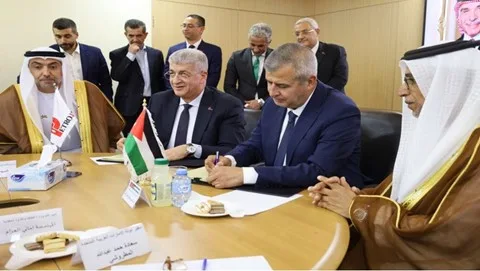
On Wednesday, the Jordanian Minister of Energy and Mineral Resources, Saleh Al-Kharabsheh, formalized agreements aimed at enhancing the energy landscape of the nation by signing contracts for natural gas supply pipelines to serve the Al-Muwaqqar and Al-Rawda industrial cities. This initiative comes with crucial backing and financing from the Abu Dhabi Fund for Development, marking a strategic partnership that underscores the Gulf’s role in regional energy infrastructure development.
The agreements are pivotal not only for Jordan’s industrial growth but also as a significant step towards energy diversification. As the country seeks to reduce its reliance on traditional energy sources, the introduction of natural gas is expected to bolster industrial productivity and attract more foreign investment. This is particularly significant in the context of Jordan’s ongoing economic reforms aimed at stimulating growth and enhancing competitiveness within the region.
In the broader context of the Gulf region, where natural gas plays an essential role in powering industries, Jordan’s move aligns with regional trends aiming to secure sustainable energy sources. Countries like the UAE and Qatar have led the way in gas production and exportation, setting benchmarks for energy efficiency and sustainability in industrial operations. By establishing a reliable supply of natural gas, Jordan positions itself as a more attractive destination for investors looking to tap into the Middle Eastern market.
Moreover, cooperation with the Abu Dhabi Fund for Development not only signifies financial support but also strengthens ties between Jordan and the UAE, fostering collaboration that could extend beyond energy. This partnership has the potential to lead to further investments in infrastructure, technology transfer, and capacity building that could greatly benefit Jordan’s industrial sectors.
For investors and businesses, the expansion of natural gas infrastructure in Jordan offers multiple implications. Firstly, it indicates a more stable energy supply for operating facilities, which can directly affect operational costs and profit margins. Secondly, the strategic development of these industrial cities could create a ripple effect, enhancing local job markets and fostering entrepreneurship as new industries emerge and expand.
Looking ahead, the development of natural gas pipelines is only the beginning of a broader energy revolution in Jordan. This initiative is likely to pave the way for the introduction of renewable energy solutions, including solar and wind, complementing fossil fuel investments. As Jordan continues its journey towards energy independence and sustainability, the collaboration with GCC nations is expected to play a critical role in shaping its economic future.
Leave a Reply