
Dubai is set to undergo significant transformations by 2040, with ambitious plans that will reshape the city’s infrastructure and urban landscape. The Supreme Committee for Urban Planning has outlined these goals, which include a projected population growth to 7.8 million, surpassing Sydney, Australia, in the process.
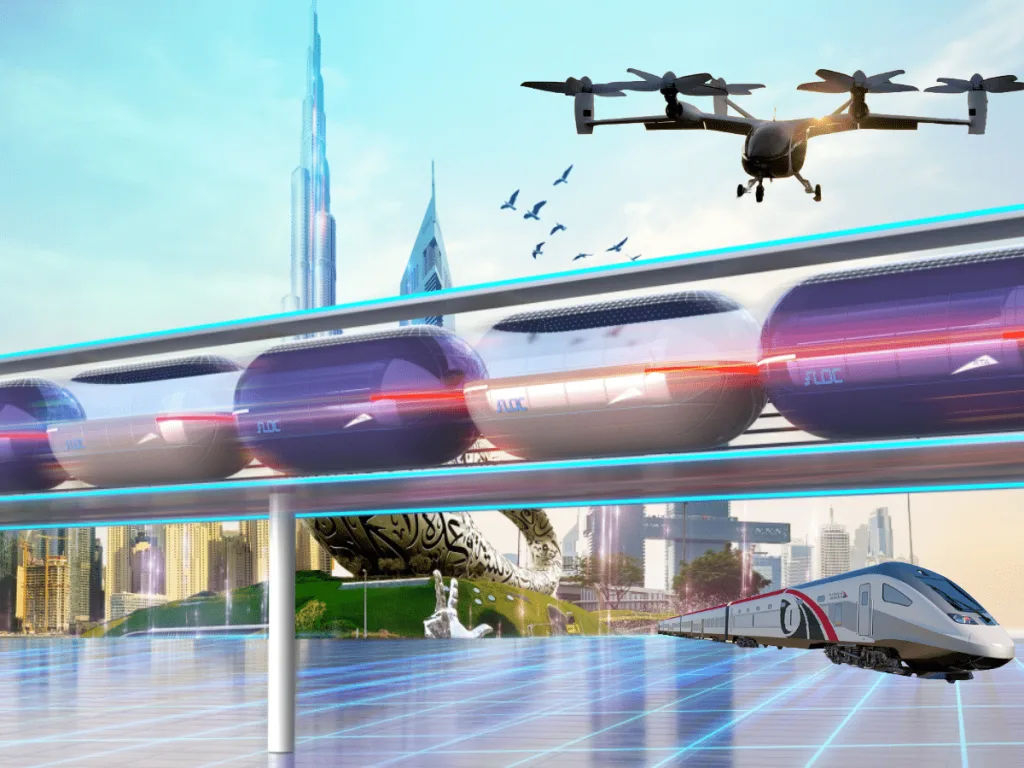
A major highlight of the plans is the expansion of the Dubai Metro, which will feature an impressive 140 stations across a network spanning over 228 square kilometers. Confirmed by the Dubai Government in 2024, the new metro system will include a blue line stretching 30 kilometers, with 15.5 kilometers underground and 14.5 kilometers above ground. The project will integrate with existing lines and introduce a biometric payment system, allowing commuters to use palm payments starting as early as 2026.
In addition to the metro, the city is exploring the introduction of electric self-driving pods, specifically the Floc Duo Rail, which can accommodate up to 16 passengers. While not yet confirmed for 2040, these pods aim to alleviate traffic congestion.
Flying taxis are also on the horizon, with plans for their introduction by early 2026. These air taxis are expected to offer quick and affordable rides across the city, comparable in price to an Uber Black.
Another ambitious project is the development of Palm Jebel Ali, which will stretch over 13.4 kilometers and feature more than 80 hotels and resorts. Though there is no set completion date, it is anticipated that the island will be operational by 2040.
Dubai’s coastline will also see significant changes, with the introduction of mangroves to combat CO2 emissions and coastal erosion. The plan includes a visitor center and a vast area of greenery along 72 kilometers of coastline.
Travelers will likely find themselves flying out of the newly refurbished Al Maktoum International Airport, which is set to be five times larger than Dubai International Airport. This transformation will commence soon, with full operations expected to transition to the new airport by the 2050s.
The city is also working on a passenger rail service connecting Dubai to Abu Dhabi, which will reduce travel time to under one hour. The existing freight track will be developed to accommodate passengers, with connections to 11 locations.
Finally, Dubai plans to construct the world’s tallest wellness resort, Therme Dubai, featuring a massive interactive park and the largest indoor botanical garden. This Dhs2 billion project, set to open in 2028, will be a significant addition to Dubai’s skyline, as noted by Sheikh Hamdan bin Mohammed.
Leave a Reply