
Abu Dhabi has announced a call for companies to submit bids for a contract aimed at creating a “digital twin” that will facilitate real-time monitoring of air quality in one of the world’s dustiest regions. This digital twin will serve as a virtual representation of the local environment, enabling authorities to simulate various environmental scenarios and make informed decisions based on data.
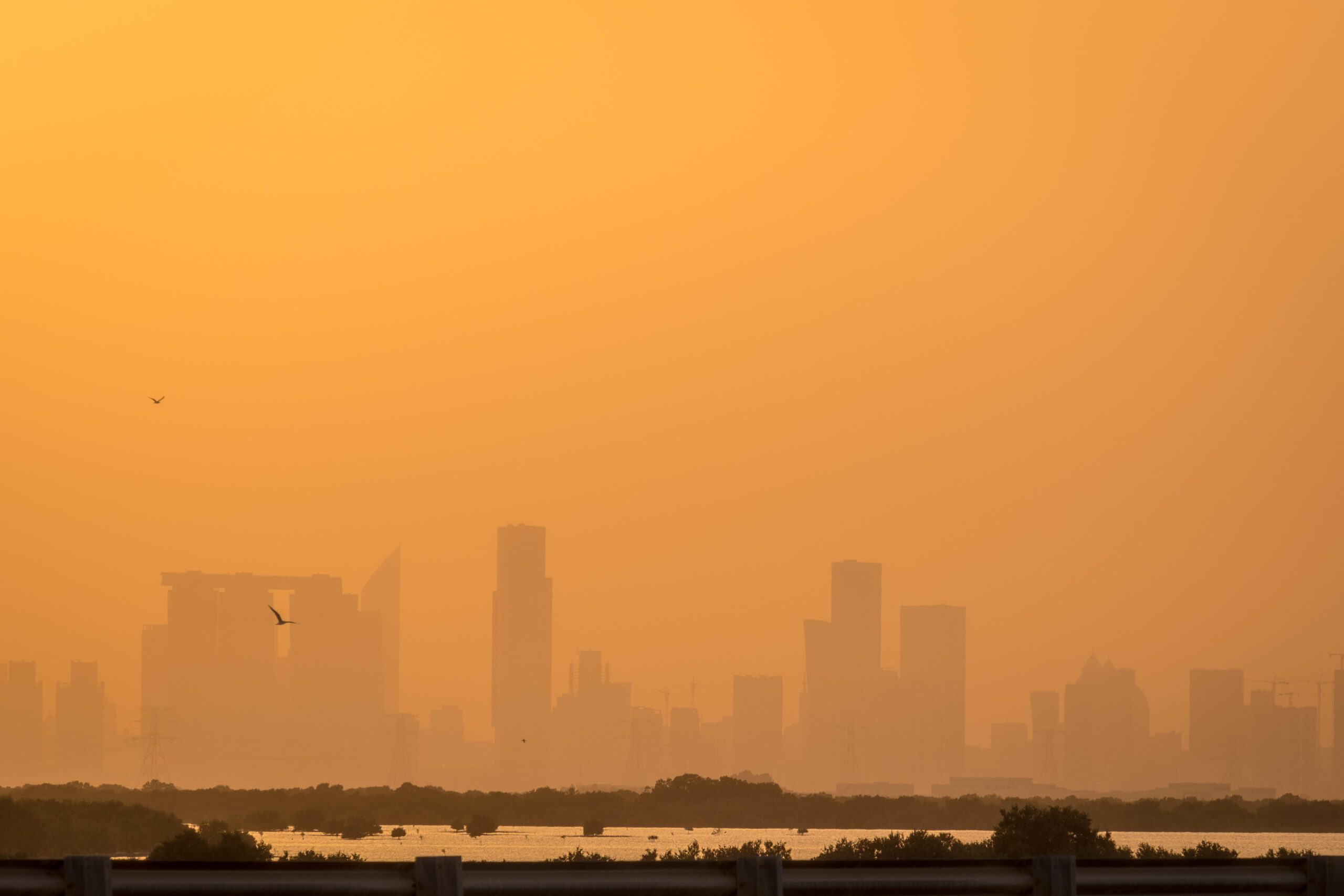
The Environment Agency Abu Dhabi (EAD) is leading this initiative as part of a multi-year project to build a comprehensive virtual model of the emirate’s environment, starting with pollution data. According to the EAD’s tender documents, the system will gather and analyze real-time data from air quality sensors to monitor harmful pollutants, including fine dust particles and greenhouse gases such as carbon dioxide and nitrogen oxides. Specific financial details about the project have not been disclosed.
The region is known for its high levels of airborne dust, which extends from Morocco through the Sahara desert and across the Arabian Peninsula to India. Additionally, the UAE is located in one of the largest oil-producing areas globally, where the practice of burning off gas as a by-product of oil production is prevalent. A 2023 analysis by the BBC revealed that oil fields in the UAE, Kuwait, Iraq, and Iran—responsible for approximately 15 percent of global oil demand—were emitting or partially burning 36.6 billion cubic meters of gas into the atmosphere. This activity has been found to release pollutants, including nitrogen dioxide and ozone, that can travel hundreds of miles and often exceed World Health Organization limits.
Abu Dhabi intends to leverage the digital twin platform to bolster public health initiatives and inform environmental policy, aligning with its Environmental Vision 2030 strategy. The first phase of this project will last for 12 months and involve the design of the digital infrastructure along with the deployment of Internet of Things (IoT) devices to capture live air quality data.
Moreover, the system is expected to assist in developing predictive models that can forecast potential risks related to industrial emissions and pollution events driven by dust storms. This initiative comes amid a season marked by frequent dust storms in the region, with orange dust alerts recently issued in Dubai and Abu Dhabi, where the UAE’s National Centre of Meteorology has cautioned about reduced visibility and cooler temperatures.

The EAD has indicated that future phases of the digital twin project will expand its focus to include water quality, biodiversity, and other environmental aspects.
Leave a Reply