
Emirates Water and Electricity Company (EWEC), the sole procurer and supplier of water and electricity in Abu Dhabi, is implementing a strategy to recycle existing power and water plants as part of its broader clean energy transition plan. This initiative aims to enhance grid stability and contribute to decarbonisation efforts in the region.
Mark Hedges, EWEC’s Executive Director of Asset Management, shared details of this approach during a panel discussion at The World Utilities Congress, held in Abu Dhabi from May 27 to May 29, 2025. He highlighted that while many clean energy initiatives focus on new technologies and infrastructure, repurposing existing plants can provide a practical solution toward reducing carbon emissions.
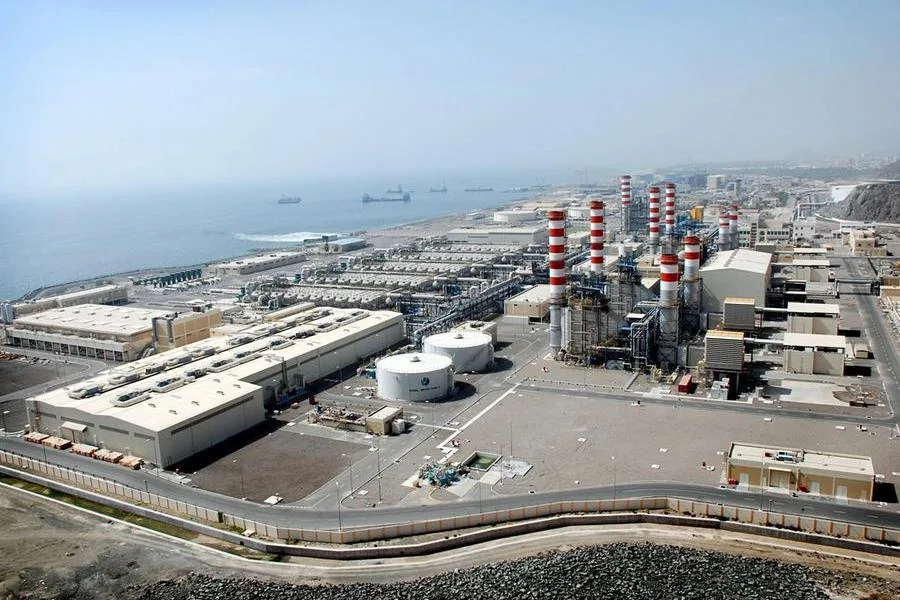
Hedges explained that the company is converting old plants to standby power, which will only operate a small amount of time to help stabilise the grid. Last month, EWEC extended the Power Purchase Agreement (PPA) for the Shuweihat S1 power and water plant by 15 years, with plans to decommission its water desalination operations and convert it into a natural gas-fired open-cycle power plant.
The Shuweihat S1 plant, commissioned in 2005, has a power capacity of 1.5 gigawatts (GW) and a water production capacity of 455 000 cubic metres per day (m3/day). It is operated by Sumitomo Corporation in partnership with TAQA and ENGIE. As the first project in the UAE to undergo a long-term extension through plant conversion, the reconfigured plant will operate on-demand with a reduced capacity of 1 130 megawatts (MW), thereby contributing to lower CO₂ emissions.
According to Hedges, the repurposing strategy provides several benefits. Firstly, it improves efficiency by redirecting steam from water production to power generation. Secondly, it leads to cost savings by avoiding the capital expense of new high-emission plants that could conflict with the UAE’s 2050 net-zero goals. Hedges stated, “We don’t really want to commit to a brand-new plant that has a lifetime that’s either too long or we have to curtail it… then the cost goes up because you’re paying it off over a short period.”
Additionally, the strategy enhances grid stability by ensuring standby power capacity, which is crucial for accommodating an increasing share of variable renewable energy. Hedges remarked that this recycling of plants, described as a life extension project, is beneficial for the overall system.
EWEC’s recycling strategy aligns with its commitment to delivering electricity and water through a lower-carbon grid. The company is also transitioning to reverse osmosis (RO) technology for water production, moving away from traditional thermal desalination. Hedges noted that all of their water is now produced by RO, powered by a decarbonising power grid.
In its Statement of Future Capacity Requirements for 2024–2030, EWEC projected that over 7 GW of power and more than 2 million m3/day of water capacity will reach the end of existing contracts by 2037. The company plans to reconfigure and extend plants that are nearing contract expiry, expecting these extensions to add nearly 3.5 GW of power capacity by 2030, increasing to just over 6 GW by 2035.

(Writing by Rajiv Pillai; Editing by Anoop Menon)
Leave a Reply