
The United Arab Emirates is experiencing a significant surge in energy demand as it embraces new technologies, particularly due to the rapid development of data centres. Minister of Energy and Infrastructure Suhail Al Mazrouei highlighted this trend during his remarks at the World Utilities Congress in Abu Dhabi. He noted that the increasing population and the rise of artificial intelligence are key factors driving the demand for energy in the country.
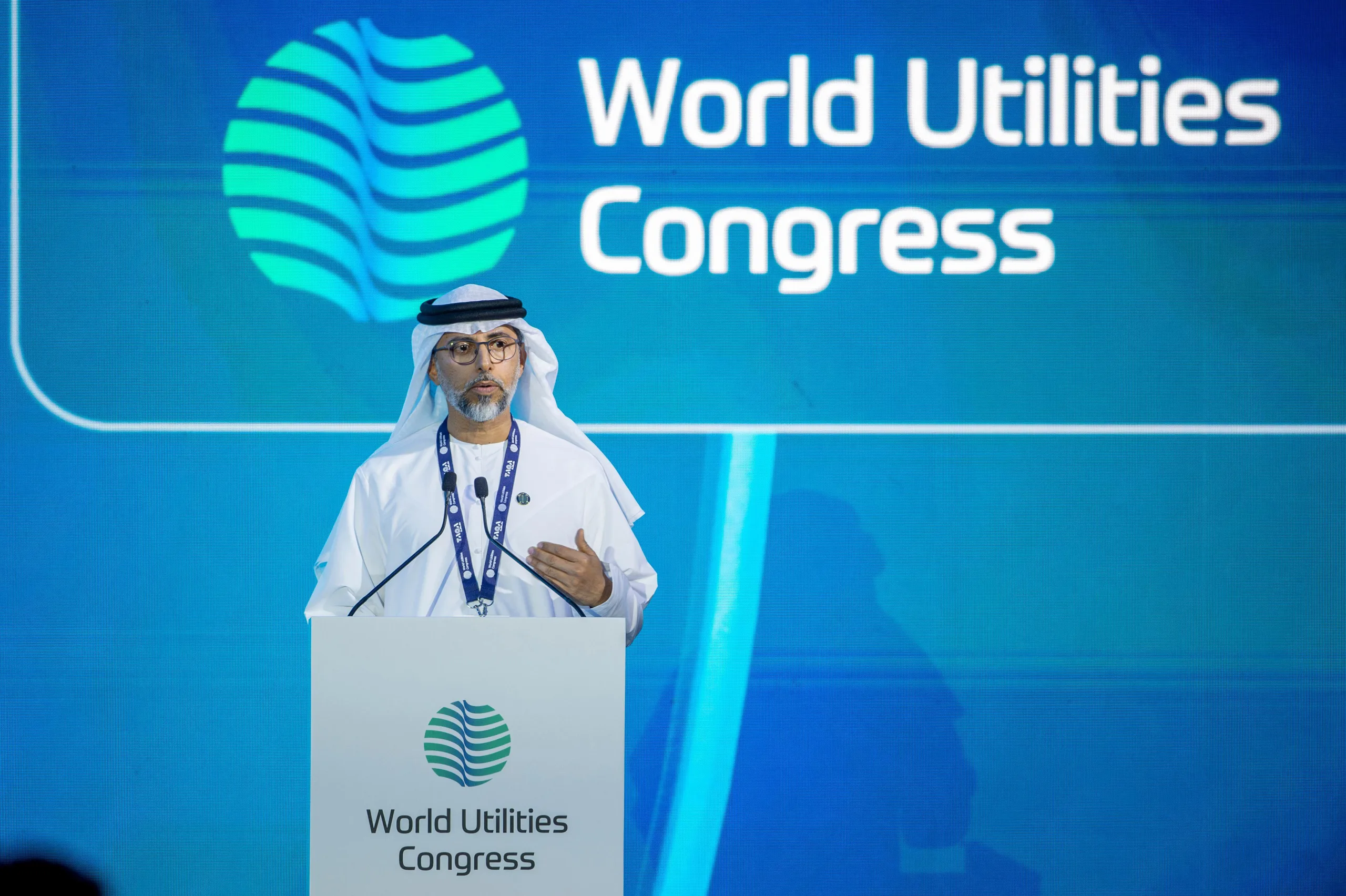
At the congress, Mr. Al Mazrouei emphasized the importance of governments being open to innovative ideas for improving efficiency. He mentioned that the recent announcement of Stargate UAE, a large-scale data centre project in Abu Dhabi, reflects this technological advancement. This project, which involves major companies like AI leader G42, OpenAI, Oracle, Nvidia, Cisco, and SoftBank Group, will feature a one-gigawatt compute cluster operating within the newly established five-gigawatt UAE–US AI Campus.
The Minister pointed out that countries must objectively assess energy costs, as many are facing challenges with regulators unable to keep pace with industry developments. He described the renewable energy sector as “very progressive,” noting that it has been working to lower costs for consumers while enhancing overall system efficiency.
Mohamed Al Hammadi, the managing director and chief executive of Emirates Nuclear Energy Company (Enec), stressed the need for urgent action to increase clean energy sources, particularly nuclear power, to meet the growing global electricity demand. He stated that as the world becomes more aware of grid security and the need for reliable and clean electricity, leading in AI and digital infrastructure requires leadership in energy as well.
Data centres are known to consume large amounts of energy, with some utilizing sustainable sources such as solar and water. Francesco La Camera, the director general of the International Renewable Energy Agency, commented on the unclear understanding of the additional energy demand generated by data centres. He stated that if these centres require more power, it should ideally come from renewable sources. He also noted that the use of AI could potentially reduce energy demand through more efficient systems.
Despite the increasing emphasis on renewable energy, Mr. Al Mazrouei cautioned that Opec+ should remain aware of rising oil demand. He indicated that the oil group, led by Saudi Arabia and Russia, is working diligently to balance the market and ensure sufficient investment in supply. He warned of potential chaos in the market if Opec+ were not present, which could lead to shocks detrimental to consumers.
In recent developments, oil prices saw their first weekly decline since April, amid concerns regarding negotiations between US and Iranian officials over Iran’s nuclear program. While prices rose early on Tuesday, they had previously decreased due to Opec+’s plans to increase supply in July. The group had announced output increases of 411 000 barrels per day for May and June, with expectations for a similar announcement for July.

Additionally, the Abu Dhabi Department of Energy, in collaboration with G42’s unit Presight, introduced the Abu Dhabi Water and Energy AI Solution platform at the summit. This innovative platform aims to centralize decision-making across power, water, district cooling, and petroleum systems. The initiative targets generating Dh100 million ($27.2 million) at launch, with expectations to grow to Dh1 billion by 2028, as stated by Department of Energy chairman Abdulla Al Jarwan. He described the platform’s capabilities to optimize operations, predict complex demand patterns, and enhance customer behavior for millions of users.
Leave a Reply