
Madagascar is actively working to deepen investment cooperation and enhance its relationship with the United Arab Emirates (UAE). This initiative was highlighted by Madagascar’s Foreign Minister, Rafaravavitafika Rasata, during her visit to the Emirates as part of a high-level delegation attending a two-day business forum.
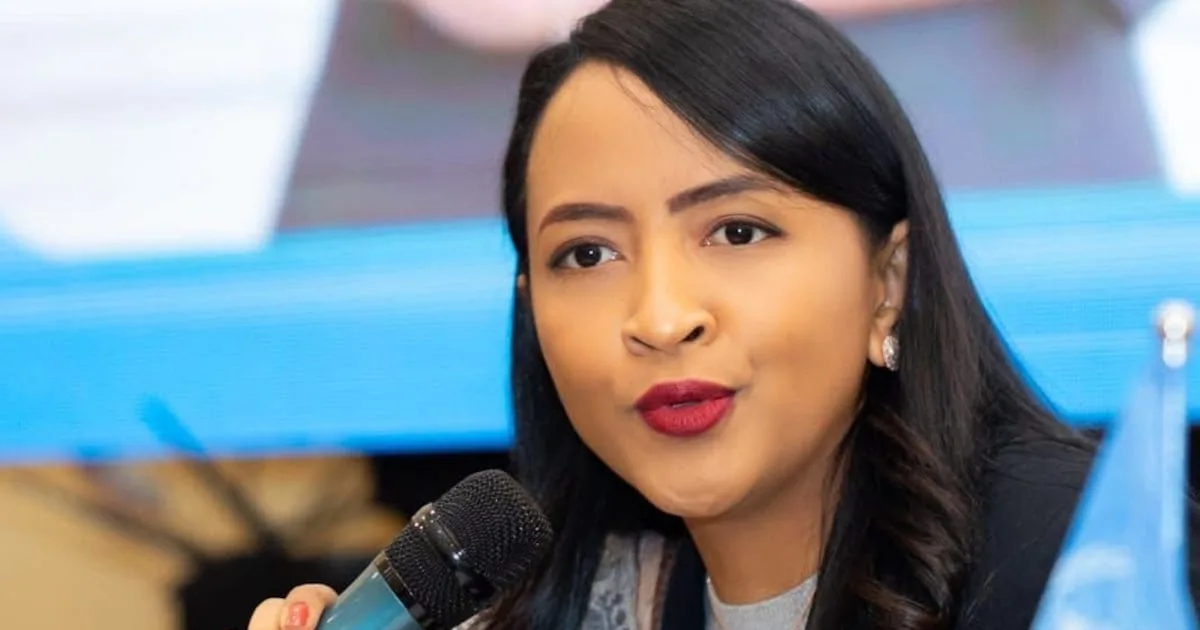
The Madagascar Business Forum, held in Dubai, gathered over 60 business owners and entrepreneurs from Madagascar to connect with their Emirati counterparts. Rasata stated, “This forum is part of our efforts to reinforce both economic and diplomatic ties between our two nations,” reflecting the importance of this event in fostering bilateral relations.
Over the past nine years, Madagascar and the UAE have developed a growing partnership characterized by strategic cooperation in various sectors, including infrastructure development, humanitarian aid, economic investment, and digital innovation. Madagascar sees the UAE as a crucial partner for economic recovery and development, while the UAE views Madagascar as a gateway to African markets and a collaborator in sustainable development initiatives in the Indian Ocean region.
Emirates Airline has also increased its services to Madagascar by launching direct flights from Dubai to Antananarivo last year. This service has expanded from four weekly flights to six as of April, addressing the rising demand for both passenger and cargo transport. Rasata remarked, “This demonstrates growing confidence in our market,” emphasizing the opportunity to position Madagascar as not only a tourist destination but also an attractive prospect for investors.
Madagascar, located in the western Indian Ocean, is the fourth-largest island in the world, surpassing Germany and Spain in land mass. Despite its size and natural resources, the country remains relatively unexplored by international travelers. Surrounded by popular holiday destinations such as the Maldives, Seychelles, and Mauritius, Madagascar is distinguished by its rich biodiversity and eco-tourism potential.
The minister pointed out that Madagascar has received the Indian Ocean’s Leading Green Destination award seven times and is focusing on sustainable and community-based tourism that showcases local culture. She identified agriculture as another key sector for potential Emirati investment, particularly in the context of food security, highlighting that Madagascar has nearly 600,000 square kilometers of land and 36 million hectares of arable land, which presents significant opportunities for agribusiness and agricultural development.
Situated at a strategic point along major Indian Ocean shipping routes, Madagascar serves as a maritime crossroads between Africa, Asia, and the Middle East. Rasata mentioned that the country is expanding its main port in Toamasina, with completion expected by 2026, which will further solidify Madagascar’s status as a trade hub. She noted that the country is uniquely positioned on both economic and ecological fronts, housing 5 percent of the world’s biodiversity.
Despite these ambitions, Madagascar faces domestic challenges. A February 2025 World Bank report indicated that while the country’s economy is recovering, growth remains inadequate and uneven to significantly enhance living standards. The report stated that economic growth was at 4.2 percent in 2024, with projections averaging 4.7 percent from 2025 to 2027.
Rasata emphasized the need to address rural poverty, as approximately 80 percent of the Malagasy population lives in rural areas and relies on agriculture for their livelihoods. She stated, “Our focus is on transforming the agricultural sector to support food security, create jobs and add value.” Madagascar currently ranks as Africa’s third-largest rice producer, and the government aims to become the top producer to meet local demand, which still requires importing 500 000 tons of rice annually.
Attracting both foreign and domestic investment is crucial for supporting this transformation, according to Rasata. The World Bank has highlighted the urgent need for structural reforms in energy, digital infrastructure, and mining to sustain higher growth rates. Madagascar’s energy sector faces significant challenges, with only about one-third of the country’s 30 million people having access to electricity, as reported by the International Monetary Fund.

Rasata acknowledged the existential nature of the energy challenge, stating, “There is strong political will to ensure our national utility can meet local demand and expand investment in renewable energy.” She outlined the government’s goal to double the country’s energy generation capacity by 2030, with 70 percent of this capacity coming from renewable sources, underscoring that all efforts are aligned with this objective.
Leave a Reply