The United Arab Emirates (UAE) and the European Union (EU) are set to commence negotiations for a comprehensive free trade agreement, as announced by officials from both sides. This initiative aims to enhance economic ties and stimulate growth between the two parties.
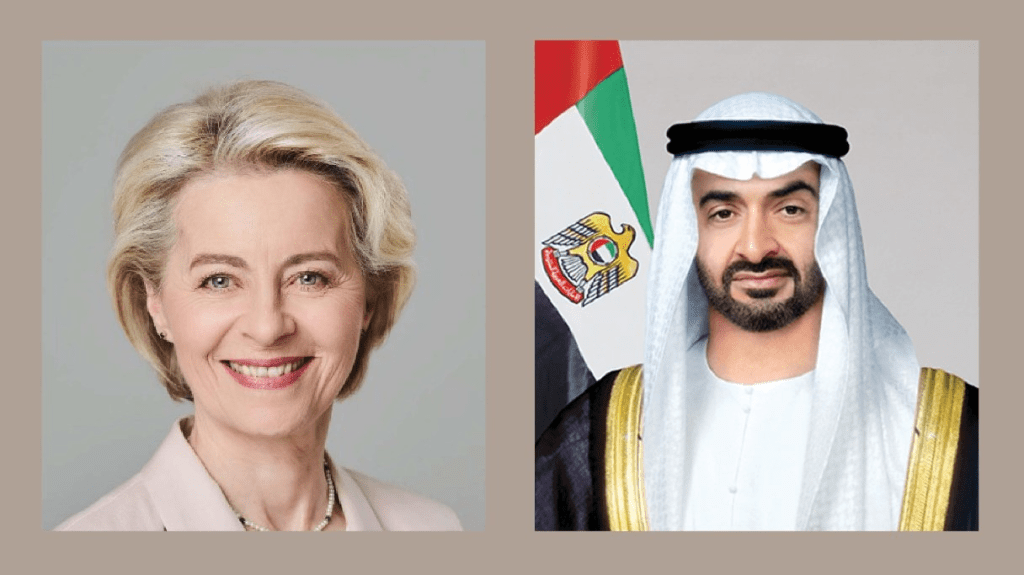
Sheikh Mohamed bin Zayed Al Nahyan, the President of the UAE, expressed that the UAE has strong and enduring relations with the EU and its member states. In a message shared on X, he highlighted the importance of this economic partnership agreement, or Cepa, stating that it would promote economic growth. Ursula von der Leyen, the President of the European Commission, echoed this sentiment in her own post on the platform.
Currently, the UAE has signed 26 Cepas, including agreements with countries like India, Indonesia, and Australia. The UAE aims to double its trade with the Republic of the Congo through a Cepa and anticipates that a trade deal with Ukraine will boost its GDP by $1 billion. Additionally, trade with New Zealand is expected to triple following their Cepa agreement.
A Cepa is generally broader than a standard free trade agreement (FTA), encompassing not only goods but also services, investment, intellectual property rights, government procurement, and regulatory aspects of trade. The main goals of the upcoming Cepa negotiations include enhancing bilateral trade and investment, as well as strengthening connections between the business communities of the EU and the UAE, according to the UAE news agency Wam.
The EU is a crucial trading partner for the UAE, being the second-largest, accounting for 8.3 percent of its total non-oil trade, which was valued at approximately $68 billion last year. These negotiations come at a time when the international trade landscape is shifting, particularly as U.S. President Donald Trump is attempting to redefine trade rules through significant tariff policy changes, which have led to declines in stock markets and global oil prices.
The European Commission indicated that discussions will prioritize cooperation in strategic sectors, notably renewable energy, green hydrogen, and critical raw materials. In November, Luigi Di Maio, the EU’s special envoy to the Gulf, mentioned that the bloc is working to revive and potentially upgrade talks for a larger free trade agreement encompassing the Gulf Cooperation Council (GCC). However, those negotiations have faced challenges since 2008 due to disagreements over oil and public tenders.
As the second-largest economy within the GCC, the UAE plays a significant role in this economic and political bloc, which also includes Saudi Arabia, Kuwait, Qatar, Oman, and Bahrain.
Leave a Reply