
Emirates and Air China have signed a Memorandum of Understanding (MoU) to deepen their partnership and improve travel links between the United Arab Emirates and China. The agreement was formalized during the 81st International Air Transport Association (IATA) Annual General Meeting (AGM) and World Air Transport Summit (WATS) held in New Delhi.
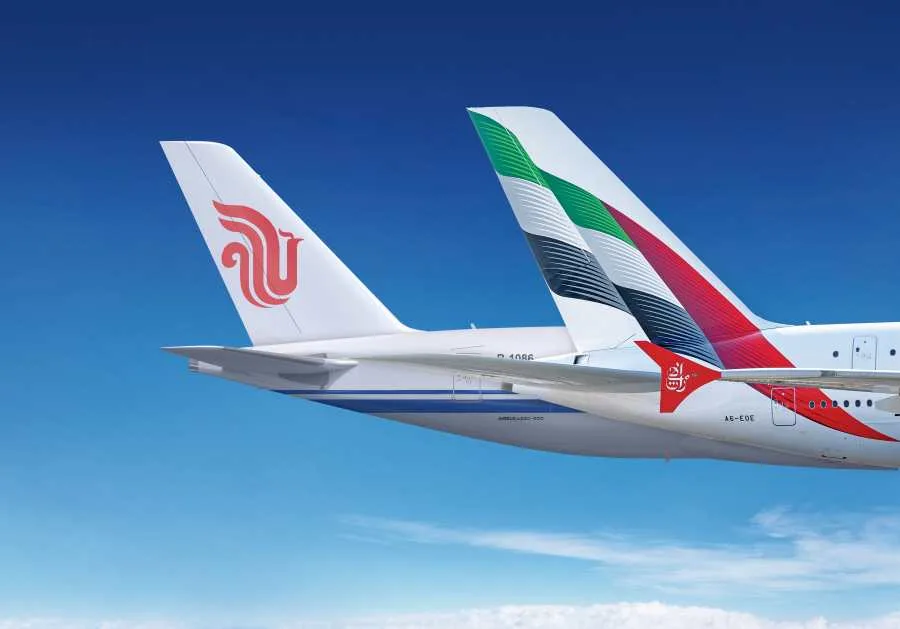
The MoU was signed by Adnan Kazim, Emirates’ Deputy President and Chief Commercial Officer, and Yan Fei, Air China’s Senior Vice President and Chief Commercial Officer. This agreement builds on over 26 years of collaboration that began in 1999 and marks a new chapter in their interline and commercial cooperation.
The partnership aims to facilitate seamless travel and trade between the UAE and China, which are both rapidly growing aviation markets. Since 2018, around 18 000 Emirates customers have benefited from existing interline arrangements that provide smoother connections and expanded network access.
The MoU includes plans to explore reciprocal codeshare agreements on selected routes, allowing both airlines to place their flight codes on each other’s services between major hubs such as Beijing and Dubai, as well as other cities. This will simplify travel for passengers by enabling them to book single-ticket itineraries and increasing their destination options.
Emirates is set to expand its operations in mainland China, with 49 weekly flights scheduled to begin on July 30, 2025. This includes double daily flights to both Beijing and Shanghai, as well as daily services to Guangzhou, Shenzhen, and Hangzhou. This expansion is in response to the increasing demand for travel and trade between the two countries and aligns with the ambitions of the Belt and Road Initiative (BRI), which aims to enhance connectivity across Eurasia.
Yan Fei highlighted the significance of this collaboration, stating that Air China values its partnership with Emirates and views the MoU as a vital milestone that supports the BRI by expanding the route network and promoting global connectivity.
Passengers can look forward to a more integrated travel experience, which will include coordinated flight schedules, reduced minimum connecting times, and better access to lounges and premium services. Additionally, both airlines will develop collaborative strategies for cargo operations and frequent flyer loyalty programs, benefiting both leisure and business travelers.
Emirates and Air China are also committed to collaborating on sustainability initiatives. They plan to share knowledge in areas such as revenue management, data analytics, digitalization, and, importantly, the use of Sustainable Aviation Fuel (SAF). Both airlines are focused on reducing aviation’s environmental impact in accordance with global standards set by the International Civil Aviation Organization (ICAO).
The UAE government’s Ministry of Energy and Infrastructure is advocating for sustainable development in aviation, particularly through the adoption of SAF and innovative technologies aimed at reducing emissions. Similarly, the Civil Aviation Administration of China (CAAC) is promoting green growth strategies and carbon neutrality goals, encouraging airlines to invest in cleaner fuels and operational efficiencies.
By reinforcing their partnership, Emirates and Air China are also strengthening the diplomatic and economic ties between the UAE and China. Their collaboration supports bilateral trade, tourism, and cultural exchange, which are key aspects of the UAE-China Strategic Partnership.
This MoU represents a broader trend in the aviation industry towards partnerships that enhance network breadth, optimize operations, and provide better value to passengers. The IATA supports such cooperation as vital for rebuilding the aviation sector following the pandemic, emphasizing the importance of connectivity, efficiency, and sustainability.

The Memorandum of Understanding between Emirates and Air China marks a new phase in their long-standing partnership, focusing on deeper codeshare cooperation, expanded network reach, enhanced customer benefits, and joint sustainability initiatives. As Emirates increases its presence in mainland China and Air China enhances global connectivity, travelers and businesses are set to benefit from a more integrated and sustainable aviation network connecting two of the world’s most dynamic regions.
Leave a Reply