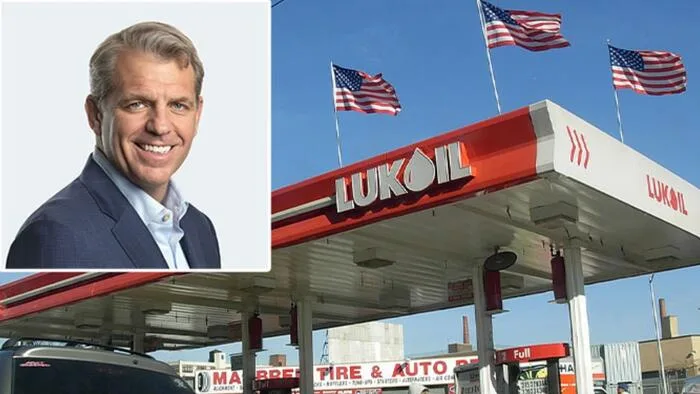
The recent agreement involving a group of investors led by American billionaire Todd Boehly to acquire Lukoil’s international assets has ignited fierce debate in Washington. The deal, seemingly backed by the U.S. government through the International Development Finance Corporation (DFC), involves the purchase of the Russian oil giant’s holdings valued at approximately $16 billion. This transaction, however, has not come without significant controversy, particularly due to the involvement of frozen Russian securities and the ethical implications surrounding it.
At the heart of the outrage is the fact that the DFC, the U.S. government’s development finance institution, was barred from investing in Russia due to sanctions imposed following the full-scale invasion of Ukraine. Critics, particularly congressional Democrats, have labeled this agreement a “shameful deal,” claiming it undermines efforts to pressure Moscow and frustrates established sanctions frameworks. Congressman Gregory Meeks, a prominent voice in this dissent, has called for further inquiries into the administration’s motivations and actions regarding the deal.
This transaction marks a remarkable detour in the current climate of geopolitical tension, especially by allowing private capital to utilize frozen Russian assets. Boehly’s consortium includes not only his own investment firm, Eldridge, but also international players like Catena Investment Holding, based in the UAE. Such a collaboration highlights the increasing intertwining of U.S. and Gulf business interests, particularly amid the shifting dynamics stemming from the ongoing conflict in Ukraine. This complexity may alter the investment landscape in the Gulf region long-term as more Western businesses evaluate potential assets that may be attainable through controversial means.
The mechanism of trading frozen securities in exchange for vital energy assets exemplifies a new approach that could alter financial norms. By leveraging $10 billion in previously locked Russian stocks and bonds, the buying group is attempting to navigate the treacherous waters of international law and sanctions. Experts fear this sets a potentially dangerous precedent where sanctioned assets could become bargaining chips in business transactions. This method could lead to future entities seeking similar loopholes, weakening the overall effectiveness of sanctions.
Investors in the UAE and beyond may now find themselves in an ambiguous scenario as the implications of this transaction unfold. The Gulf Cooperation Council (GCC) nations are watching closely, as their financial hubs could either be a safe haven for controversial investments or a contested ground for international scrutiny. As the region seeks to cement its status as a global investment destination, maintaining ethical business practices while navigating geopolitical complexities will be essential for attracting foreign capital.
The Lukoil deal, with its intricate web of government involvement and private capital maneuvering, reveals the evolving landscape of global investment amidst sanction impacts. As discussions continue regarding the approval of this acquisition from the U.S. Treasury Department’s Office of Foreign Assets Control, the narrative could further shift based on market reactions and regulatory decisions. If completed, it remains to be seen how the final valuation will align with global oil price fluctuations and what this means for future U.S.-Russia business relations.
Leave a Reply