
Concerns about the Arabic language being overlooked in the rapidly advancing field of artificial intelligence are diminishing with the launch of the Falcon Arabic language model. This new model was created in Abu Dhabi and unveiled by the Technology Innovation Institute (TII), a research center supported by the Abu Dhabi government. The TII had previously introduced its Falcon large language model in 2023.
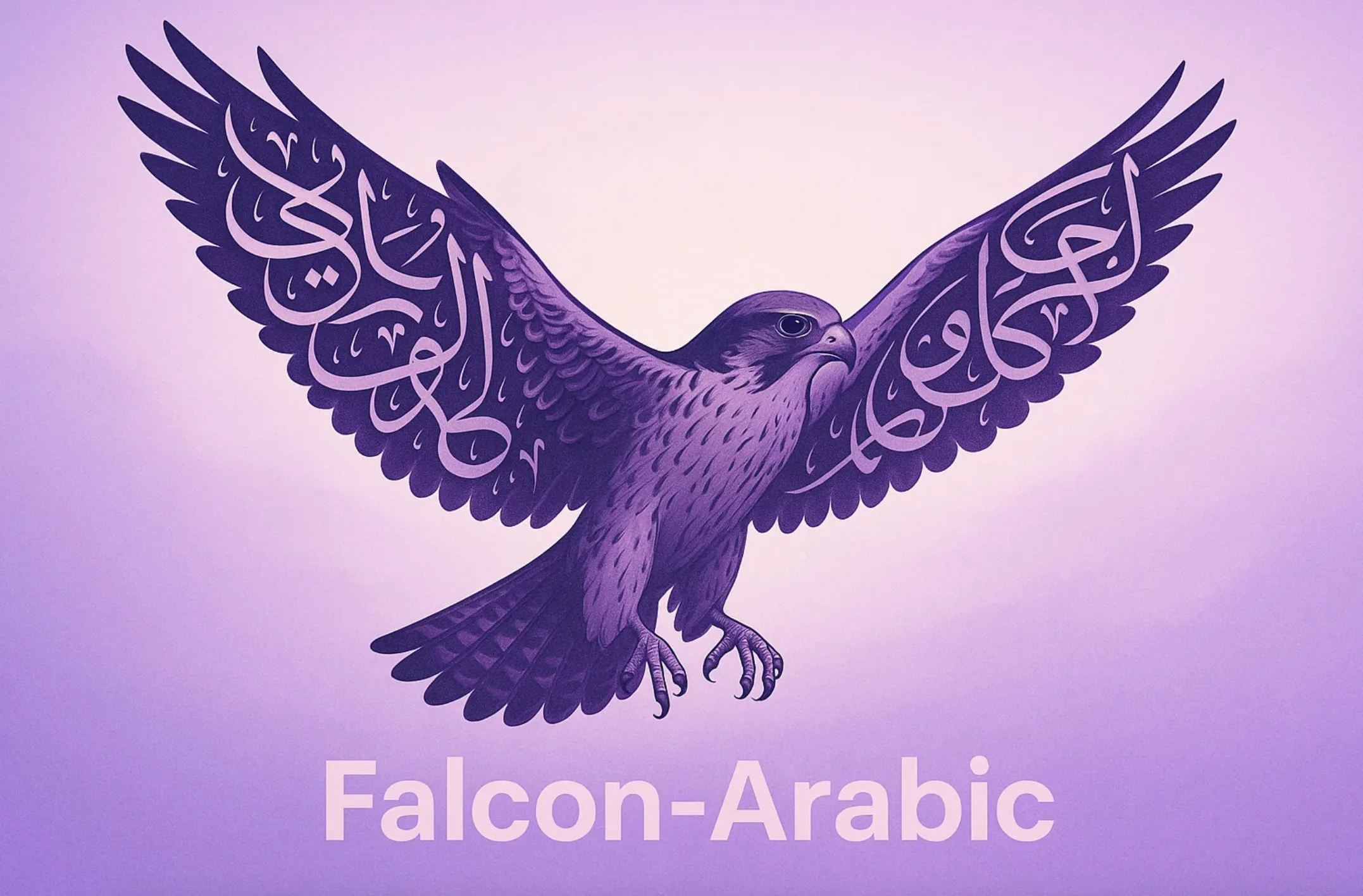
Faisal Al Bannai, adviser to the UAE President for Strategic Research and Advanced Technology Affairs, highlighted this development as a significant milestone for the Arabic language during the UAE’s Make it in the Emirates event. According to TII, Falcon Arabic is trained on a native Arabic data set that encompasses both Modern Standard Arabic and various regional dialects, capturing the full linguistic diversity of the Arab world.
The TII asserted that Falcon Arabic has outperformed other existing Arabic language models. Large language models are sophisticated systems designed to analyze extensive amounts of text and data, enabling AI applications to recognize patterns, draw conclusions, and understand subtle nuances. These models significantly influence user experiences in AI.
Despite Arabic being spoken by approximately 400 million people globally, it was not prioritized during the initial expansion of AI and large language models, with English taking the lead. The complexity of Arabic, along with its diverse dialects and unique linguistic features, created challenges for engineers and programmers developing machine learning technologies.
In recent years, the UAE has actively worked to enhance the presence of Arabic in the AI sector. In 2023, G42, along with Mohammed bin Zayed University of Artificial Intelligence and Silicon Valley-based Cerebras Systems, launched Jais, an open-source bilingual Arabic-English model. Additionally, Jais Climate, the first bilingual large language model focused on climate intelligence, was announced later that same year.

Alongside Falcon Arabic, TII also revealed its Falcon H1 model, claiming it outperforms similar offerings from Meta’s LLaMA and Alibaba’s Qwen. This model aims to facilitate real-world AI applications on everyday devices, particularly in resource-limited settings. The TII explained that efficiency was a fundamental aspect of the Falcon H1’s development, with Hakim Hacid, chief researcher at the TII AI and digital science research center, stating that it enables powerful AI on edge devices where privacy, efficiency, and low latency are essential. Hacid noted that this advancement demonstrates how new architectures can unlock opportunities in AI training while showcasing the potential of ultra-compact models.
Leave a Reply