
Dubai International Airport, recognized as the world’s busiest airport for international travelers, is set to be replaced by the advanced Al Maktoum International Airport. This transformation is part of a monumental £28 billion expansion initiative launched by the UAE, aiming to establish the largest aviation hub globally with a record capacity of 260 million passengers annually. This ambitious project is expected to redefine global air travel and solidify the UAE’s leading position in aviation infrastructure.
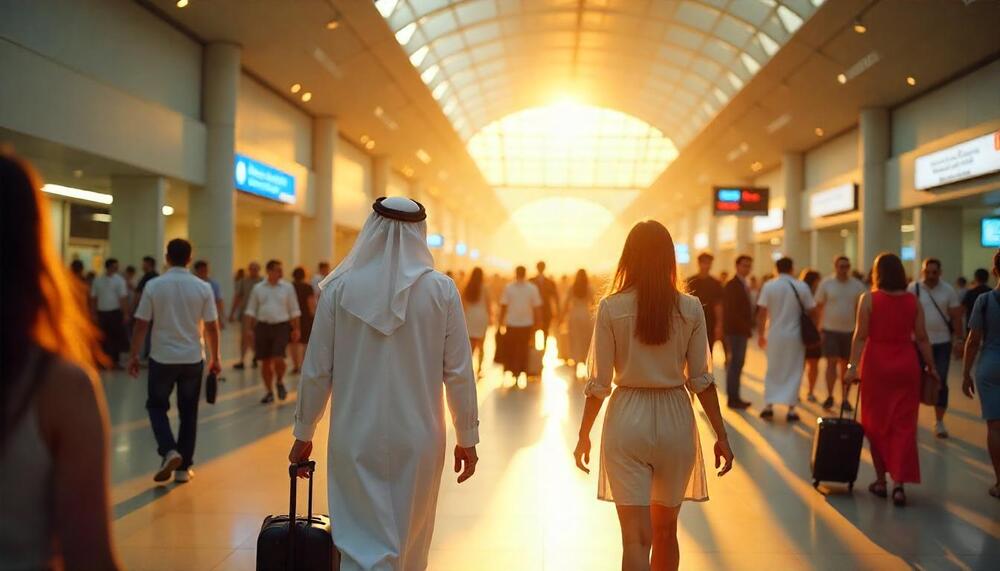
As Dubai gears up for this significant shift, Dubai International Airport, which facilitated over 92.3 million passengers in 2024, is preparing for a phased transition. While DXB has maintained its status as the busiest airport for years, the emirate is now focusing on Al Maktoum International Airport (DWC) as the future center for international air traffic.
Dubai International Airport, built in 1960, has been vital in connecting the East and West, largely due to Emirates’ extensive flight network. However, physical limitations have hindered DXB’s capacity for further expansion, as it is surrounded by residential areas and major roads. Consequently, the UAE government plans to transition all airport operations to DWC, which is located in the Dubai World Central area, supported by a substantial £28 billion investment. This transition is one of the largest airport development projects ever undertaken.
Opened in 2010, Al Maktoum International Airport was initially designed for cargo and limited low-cost passenger flights. However, it is now undergoing a significant transformation to become the world’s largest airport by capacity. Although DXB still leads in international passenger traffic, plans are in place to gradually retire it by around 2050, as operating two major airports nearby is deemed unsustainable.
The future layout of DWC will span 70 square kilometers and will feature eight satellite terminals linked by modern concourses. This design will facilitate smooth expansion and efficient passenger movement. A notable feature of the new airport will be a high-speed underground rail system, which will reduce transfer times between terminals to just 15 to 20 minutes, enhancing the travel experience with metro-like convenience. Dubai Airports has characterized DWC as a “technological marvel” that will revolutionize how travelers experience air travel.
Furthermore, the airport will be fully integrated into the Dubai South development, a city designed to accommodate one million residents. This project is expected to create numerous opportunities in employment, logistics, tourism, and real estate.
DWC will eventually include five parallel runways and up to 400 aircraft gates, making its scale unmatched by any existing airport. Its projected annual passenger capacity of 260 million significantly surpasses that of current major airports such as Atlanta, Beijing, or Heathrow. The transition to DWC will be gradual, with the first major terminal anticipated to operate by 2032, and full completion and operational transfer extending into the 2050s.
This massive infrastructure initiative aligns with the UAE’s broader economic and transport strategies, as the nation experiences a tourism surge and rapid urban growth. Decentralizing aviation activities is considered crucial for meeting future demands.
Currently, DXB remains the main airport for travelers to Dubai, with major airlines like Emirates and British Airways operating frequent routes. For now, passengers will experience no immediate changes, as the transition will be managed gradually to ensure stability in flight services. However, the shift to DWC will eventually alter global airline operations, as airlines accustomed to using DXB as a hub will need to adjust their logistics and route planning.
UK travelers, who represent a significant portion of Dubai’s international visitors, will eventually need to transition to the new airport. Although DWC is located 45 kilometers south of central Dubai, planned improvements to transport infrastructure, including expressways and high-speed rail links, will maintain easy access to the new facility.
Dubai’s transition from DXB to DWC signifies more than a logistical change; it embodies a long-term vision for the future of air travel. With rising global passenger numbers, particularly in the Middle East and Asia-Pacific regions, Al Maktoum International Airport is designed to accommodate surging demand while establishing new standards in efficiency, technology, and scale. This transition heralds the dawn of a new epoch in aviation, with DWC poised to become a landmark in global air travel.
Leave a Reply