
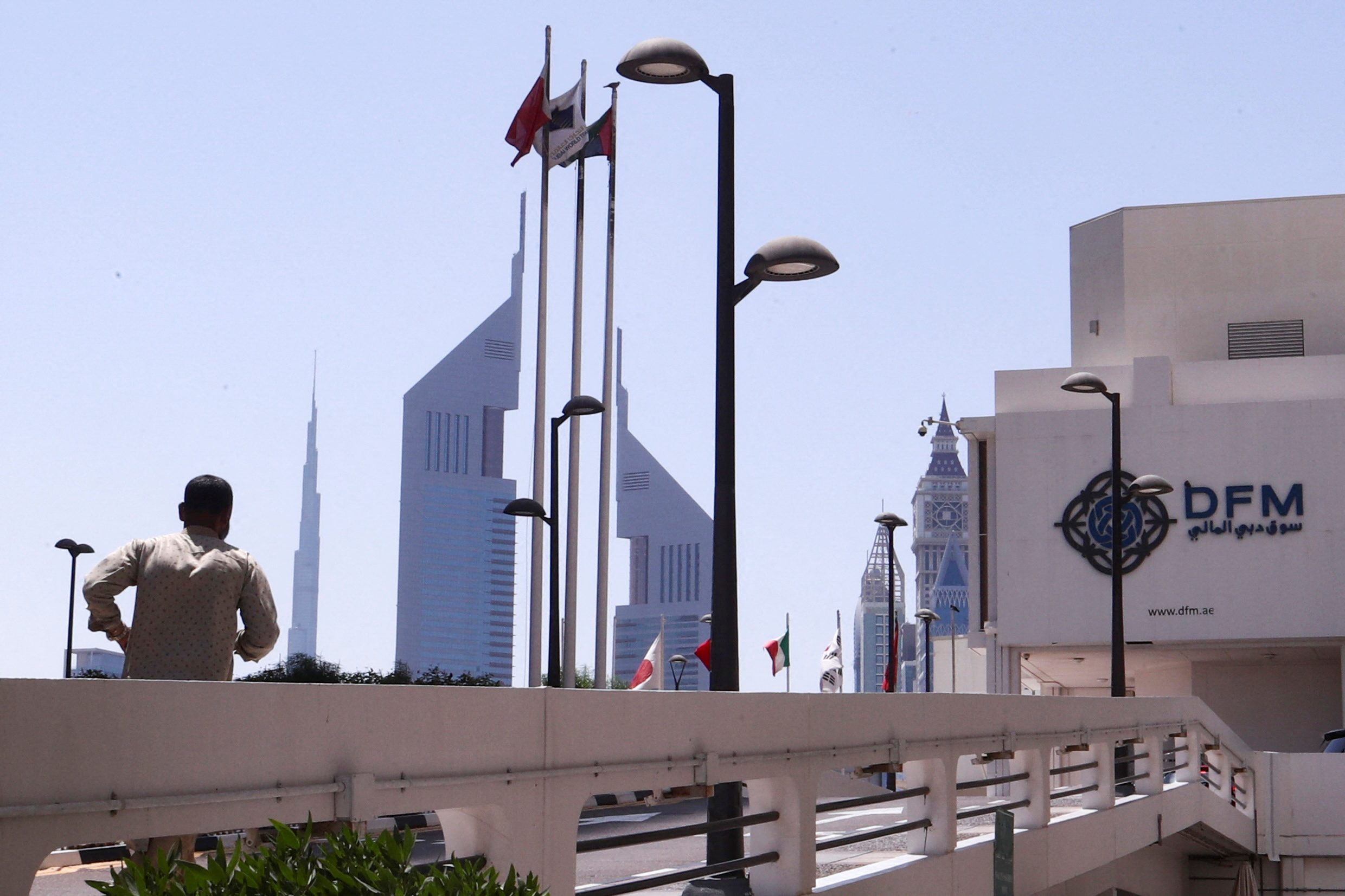
Dubai’s stock index has reached new 17-year highs this week, driven by rising first-quarter earnings and a strong non-oil economy that has attracted investors to UAE stocks over the larger Saudi market. The Dubai Financial Market General Index has seen a notable increase, highlighting the growing investor confidence in the region.
In contrast, Gulf markets, like many around the world, faced a decline in early April after President Donald Trump announced significant tariffs on imports to the US. Unlike Saudi Arabia’s main index, which has struggled to recover from its losses since the tariff announcement, UAE indexes have rebounded and continued a rally that began during the early months of the Covid-19 pandemic.
Within the UAE, stock performance has varied between Dubai and Abu Dhabi over the long term. While the Abu Dhabi index has remained relatively flat for the past three years, the Dubai Financial Market General Index has steadily climbed since April 2020. Marwan Shurrab, the chief commercial officer at Dubai-based online trading platform xCube, remarked that investors are focusing on blue-chip companies with solid fundamentals, indicating that this rally is not based on speculation.
Top-performing stocks in Dubai span various sectors, including real estate leader Emaar Properties, low-cost airline Air Arabia, telecommunications company du, and the largest bank by assets, Emirates NBD. Since reaching a five-month low on April 7, Dubai’s index has risen by 13 percent, although it experienced a slight decline on Wednesday as some investors cashed in their profits. The index is up nearly 6 percent for the year and has tripled this decade.
In comparison, Saudi Arabia’s benchmark has only increased by 3 percent since the early April sell-off and remains down 6 percent in 2025. Abu Dhabi’s index has gained 8 percent since its 10-month low on April 7, up 7 percent this year, but is still 9 percent below its all-time high reached in late 2022.
Despite concerns regarding Trump’s tariffs, which are not expected to directly harm the Gulf due to a trade deficit with the US and exempt hydrocarbons, the broader implications on global economic growth forecasts and oil prices have affected investor sentiment. Ahmed Kamal, an asset manager at Azimut Middle East in Dubai, noted that the expectation of lower oil revenues for Gulf exporters has led investors to shift their focus towards UAE stocks instead of those listed on the Saudi Exchange, driving the renewed market rally.
Kamal explained that the UAE, especially Dubai, benefits from a more diversified economy and a lower budget breakeven oil price compared to Saudi Arabia, making it less susceptible to prolonged low crude prices. This is occurring alongside a strong first-quarter earnings season in the UAE, where real estate developers and banks reported profits exceeding expectations, prompting analysts to raise their full-year earnings forecasts for many companies.
As Kamal highlighted, the sustained decline of the dollar against other major currencies, including the euro and British pound, has made UAE stocks more appealing to international investors. This shift could attract new investments from regions like the eurozone and the UK. He emphasized that despite the recent gains in share prices, there remains a favorable entry point for these investors.

Additionally, investors have shown significant interest in road toll operator Salik and Dubai Electricity and Water Co. (Dewa), particularly as they are set to be included in the MSCI Emerging Markets Index on May 30. Shurrab noted that strong turnover across many stocks and healthy participation from local and regional retail and institutional investors are contributing to the optimistic market sentiment.
Leave a Reply