
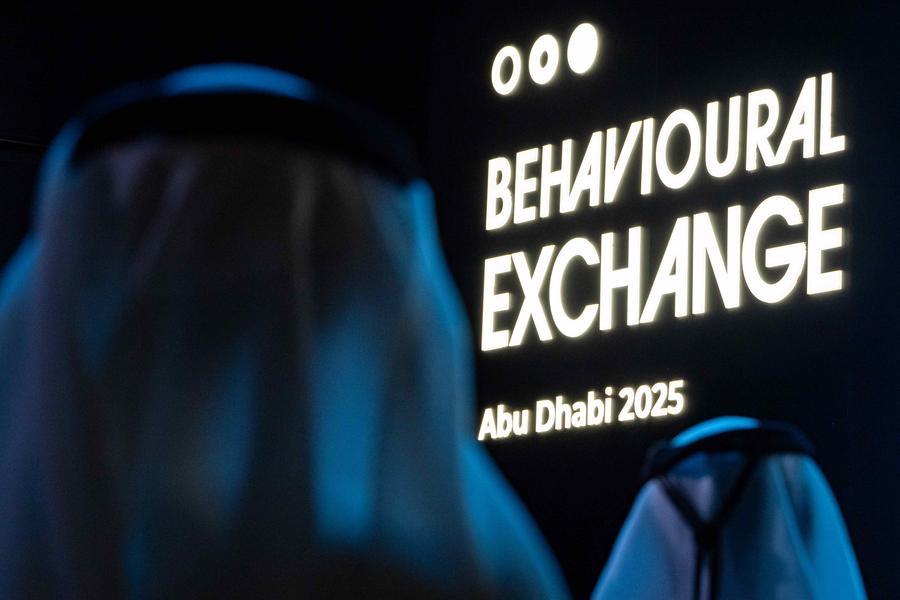
The Behavioral Exchange 2025 (BX2025) concluded in Abu Dhabi, with the UAE launching a new global network aimed at shaping the future of behavioral sciences. The event took place under the patronage of His Highness Sheikh Theyab bin Mohamed bin Zayed Al Nahyan, Deputy Chairman of the Presidential Court for Development and Fallen Heroes Affairs. The conference was organized by the Behavioral Science Group of the Office of Development Affairs and hosted at New York University Abu Dhabi from April 30 to May 1, 2025, featuring over 500 international experts, academics, and researchers in behavioral sciences.
Her Highness Sheikha Shamma bint Sultan bin Khalifa Al Nahyan, President & CEO of the UAE Independent Climate Change Accelerators, emphasized the importance of collaboration, stating that conversations during the event create a foundation for true partnerships that can drive positive change. She noted that behavioral science is essential for understanding how to encourage beneficial shifts in daily decisions and contribute to a sustainable future.
His Excellency Dr. Tariq Ahmed Al Ameri, Director of the Office of Development Affairs at the Presidential Court, expressed gratitude for the support of Sheikh Theyab and recognized the contributions of various government agencies and private institutions to the conference. The second day of the event featured the launch of the New Frontiers Program, which aims to integrate behavioral insights into global policy and philanthropic strategies, fostering discussions among global leaders on the role of behavioral science in international development.
During the New Frontiers Breakfast, H.E. Badr Jafar, Special Envoy for Business and Philanthropy, highlighted the UAE’s commitment to applying behavioral science in philanthropy to enhance the effectiveness of aid. He remarked that embedding behavioral insights into interventions is not just wise but essential for ensuring lasting impact.
Day two also included sessions on applying behavioral science to address significant global challenges, such as improving immunization rates and educational outcomes. Discussions explored how small changes in choice architecture could significantly influence decision-making. One session addressed the potential of behavioral tools to combat malaria, while others focused on strategies to tackle obesity and the establishment of behavioral insights units within government structures.
The UAE’s newly launched ‘Global Behavioral Evidence Network’ aims to unify behavioral insights units, policy labs, and social impact organizations to collaboratively tackle challenges using behavioral science. Rasha Al Attar, Director of the Behavioral Science Group, stated that the network will hold its inaugural session in Abu Dhabi in early 2026 and will facilitate annual exchanges of knowledge among governments, development agencies, and think tanks.

Nikos Nikiforakis, Co-Director of the Center for Behavioral Institutional Design at NYU Abu Dhabi, noted that the BX2025 event serves as a platform for scholars and policymakers to leverage behavioral science for meaningful change, emphasizing its relevance across various sectors. The conference concluded with participants recognizing the UAE’s vital role in integrating behavioral science into governance and fostering global cooperation in this field.
Leave a Reply