
The Sharjah Academy for Astronomy, Space Sciences, and Technology (SAASST), affiliated with the University of Sharjah (UoS), recently held an awareness event titled “Towards a Light Pollution-Free Sky in Sharjah.” This initiative aligns with the International Dark Sky Week 2025, a global campaign focused on preserving the natural darkness of the night sky while highlighting the impacts of light pollution.
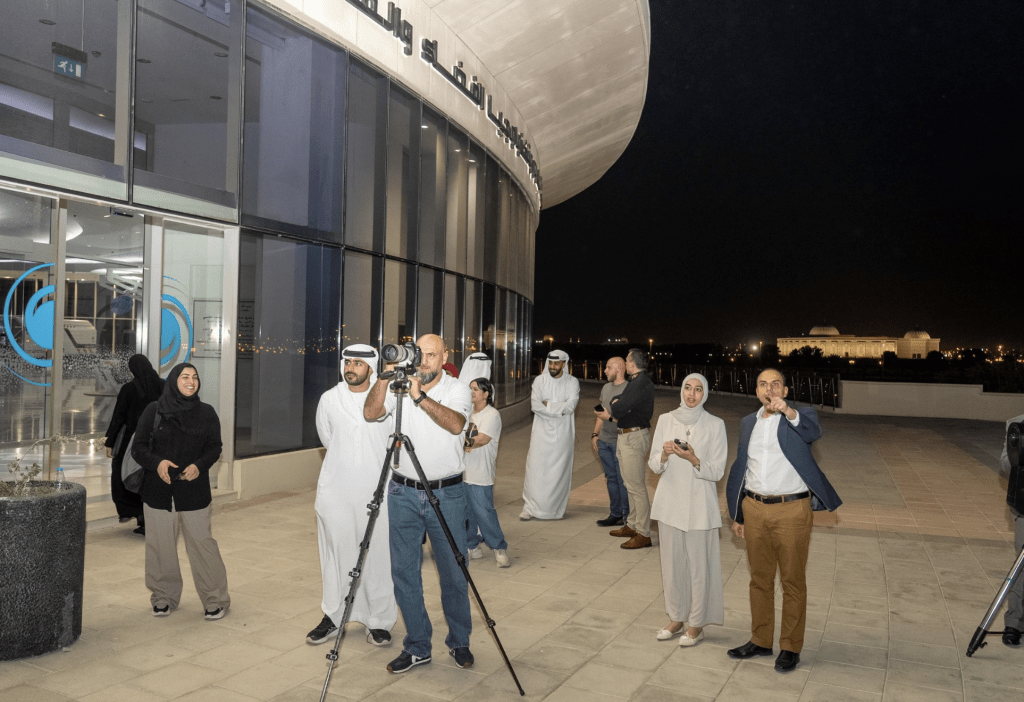
Credit: WAM
The event drew a diverse audience of astronomy and environmental science enthusiasts. Fatima Alkhateri, the Director of the Sharjah Astronomical Planetarium Department, opened the event by discussing its goals. She emphasized that protecting the night sky is a collective obligation, noting that light pollution poses significant environmental challenges that affect ecosystems, human health, and cultural heritage.
To promote awareness, the event included various interactive workshops and activities. Ammar Eissa, the Director of the Astronomical Observatories Department, delivered a lecture called “Understanding Light Pollution: Science, Impacts, and Global Efforts.” He explained the concept of light pollution, its effects on observation, human health, and the environment, along with international initiatives aimed at mitigating it.
Anoud Alzaabi, a Research Analyst, led a workshop demonstrating the effects of light pollution on stars. Simultaneously, fellow Research Analysts Mohammad Rihan and Samar Abu Aloul conducted a session on reducing light pollution through smart lighting solutions. The attendees also participated in a photography workshop focused on documenting light pollution, instructed by Yousuf Qasimi, a Scientific Guide at the Sharjah Planetarium.
The program featured a tour of the space science exhibitions and a special presentation at the Sharjah Planetarium titled “The Disappearing Night Sky.” Ahmad Salahudeen, another Scientific Guide at the Sharjah Planetarium, highlighted how light pollution affects the visibility of astronomical objects like planets, stars, and comets.

To conclude the event, a live stargazing experience was led by Research Analyst Mohammed Talafha. Participants utilized advanced telescopes to observe the night sky and explore the effects of light pollution on astronomical observations. They employed specialized instruments to assess and monitor light pollution levels, enhancing their understanding of the importance of maintaining dark night skies.
Leave a Reply