
AIM Congress 2025 hosted the “Japan Talks: Innovations Shaping the World” session, where Japanese leaders presented advancements in next-generation technology and industrial innovation that have the potential to enhance investment cooperation between the UAE and Japan, as well as across Africa.
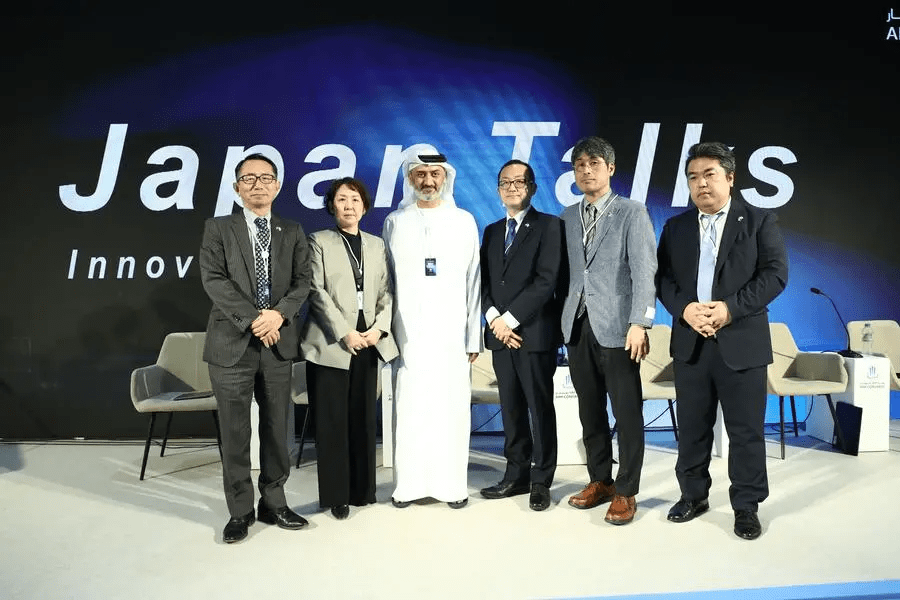
According to Zawya, Miho Sato, the Deputy Manager of Yokosuka Research Park (YRP), highlighted Japan’s advancements in smart city-focused 6G development. She stated, “We are building the infrastructure to support future urban innovation through 6G and collaborative R&D.” This initiative aims to facilitate urban innovation and strengthen technological collaboration.
Rashid Al Teneiji, the Director of International Business Development at the UAE Ministry of Economy, called for deeper collaboration between the UAE and Japan. He expressed his hope that the discussions during the session would act as a “launchpad for deeper cooperation between Japan and the UAE.”
During the session, Hiroshi Miura, Senior Manager of NTT DATA Group, discussed the significant role of the IOWN technology in global data transmission, explaining that “IOWN enables high bandwidth and low latency through light-based data transfer—poised to transform sectors like finance and health.” This technology is anticipated to revolutionize various industries by enhancing data transfer capabilities.
Takaaki Nakamura, Director of NIFCO Inc., stressed the importance of sustainable manufacturing and pointed out the widespread presence of NIFCO products in Japan, saying, “You cannot go more than one metre in Japan without being next to a NIFCO product.” His remarks underscored the company’s commitment to sustainability and innovation in manufacturing.

Furthermore, the Africa Regional Forum, themed “From Zones to Impact: African SEZs Reimagined,” gathered influential figures to discuss how Special Economic Zones (SEZs) are evolving into innovation-driven and inclusive economic ecosystems. Laura Paez from the United Nations Economic Commission for Africa (ECA) noted that Africa’s SEZs have increased from 20 in the 1990s to over 237 by 2020, although many still encounter challenges related to diversification and infrastructure.
Paez emphasized that “there are more than 200 SEZs currently operational across the continent, with varying levels of success.” She mentioned that the emerging SEZ 2.0 model focuses on technology, regional integration, and local value creation aligned with development goals.
Jasveer Singh, Cluster Director at Arise IIP, highlighted the importance of sustainable industrialization through public-private partnerships. He explained that “we focus on identifying industrial gaps and enabling value-added production at scale through public-private partnerships,” indicating that these zones serve as platforms for inclusive economic transformation rather than merely industrial parks.
Dr. Manuel Francisco Pedro, Chairman of Luanda-Bengo SEZ in Angola, called for stronger governance and infrastructure in SEZs. He remarked that “SEZs must be linked to AfCFTA goals to drive intra-African trade, harmonise standards, and create a coherent investment climate.” He emphasized that institutional support and strong governance are crucial for the success of these economic zones.
Leave a Reply