
Egypt-based co-living platform Roomz.rent has successfully raised an undisclosed pre-seed funding round from Qora71, a UAE-based investor syndicate, along with several regional angel investors. The capital will be utilized to enhance the startup’s shared rental offerings across the MENA region, with an initial focus on expanding its presence in Egypt.
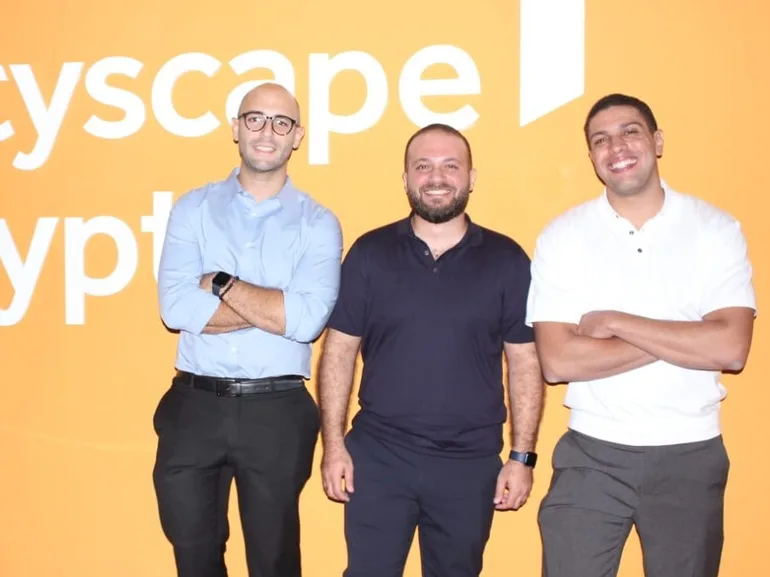
Founded in Cairo in 2024 by Mohamed Ayman, Yasser El Sarrag, and Ahmed Mandour, Roomz.rent aims to serve young professionals, digital nomads, and students by providing fully managed room rentals with a minimum stay of three months. The platform employs a matching algorithm designed to connect tenants with compatible flatmates while addressing persistent housing issues in the region, such as rigid lease agreements, high upfront costs, and a shortage of quality housing options.

Ayman, the CEO of Roomz.rent, discussed the challenges and cultural sensitivities the startup faces in Egypt’s rental market with Inc. Arabia. He highlighted that Cairo’s rental landscape suffers from significant inefficiencies, including long-term commitments and an outdated search process, making it difficult for young professionals and students to find suitable living arrangements.
To combat these challenges, Ayman and his team, who have firsthand experience with co-living in Egypt and Saudi Arabia, crafted a solution that not only digitizes the rental experience but reimagines it entirely. He emphasized that Roomz.rent aims to provide a co-living model that combines flexibility, affordability, and trust. “Despite co-living being culturally new, the demand signals were clear: people were already informally sharing apartments to cut costs or find community,” Ayman stated.
Since its inception, Roomz.rent has facilitated over US$100 000 in rental contracts in Egypt, with an average stay length of nine months. The company is now concentrating on consolidating its operations in Cairo before expanding to other urban centers in the MENA region. However, establishing a co-living brand in this area presents unique cultural challenges, which Ayman acknowledges.
He noted, “Cultural nuance has been at the heart of everything we’ve built. In Cairo—and across MENA—shared living brings important considerations around religion, privacy, and family expectations.” The platform’s matching algorithm and screening processes were intentionally designed to prioritize safety, comfort, and alignment of values among users.
Looking forward, Roomz.rent is developing a structured framework for market expansion that incorporates both data analysis and local insights. Ayman explained that they assess various indicators such as rent-to-income ratios, urban density, and population growth to inform their strategies.
The evolving behaviors of tenants in the region are also shaping Roomz.rent’s approach. Ayman observed a shift in mindset from ownership to access, and from isolation to community, particularly following the COVID-19 pandemic. He mentioned that even in traditionally conservative cultures, the stigma around shared living is decreasing, especially among young urbanites.
In preparation for scaling beyond Cairo, Ayman reflected on essential lessons learned while navigating a fragmented real estate market. He advised other entrepreneurs to validate their solutions in the simplest forms and to establish trust before attempting to scale. Ayman stressed the importance of credibility through verified listings, secure payment options, and robust customer support.

Finally, he encouraged focusing on local challenges rather than global trends, advocating for an approach that addresses specific issues within the customer experience before integrating technological solutions.
Leave a Reply