
The Abu Dhabi Fund for Development (ADFD) has signed a significant financing agreement worth AED752 million ($205 million) with the Gulf Cooperation Council Interconnection Authority (GCCIA) to facilitate the expansion of the GCC power grid interconnection with the UAE’s national electricity network. This project is a crucial element of the UAE’s long-term strategy aimed at diversifying and modernizing its energy infrastructure, in line with the UAE Energy Strategy 2050.
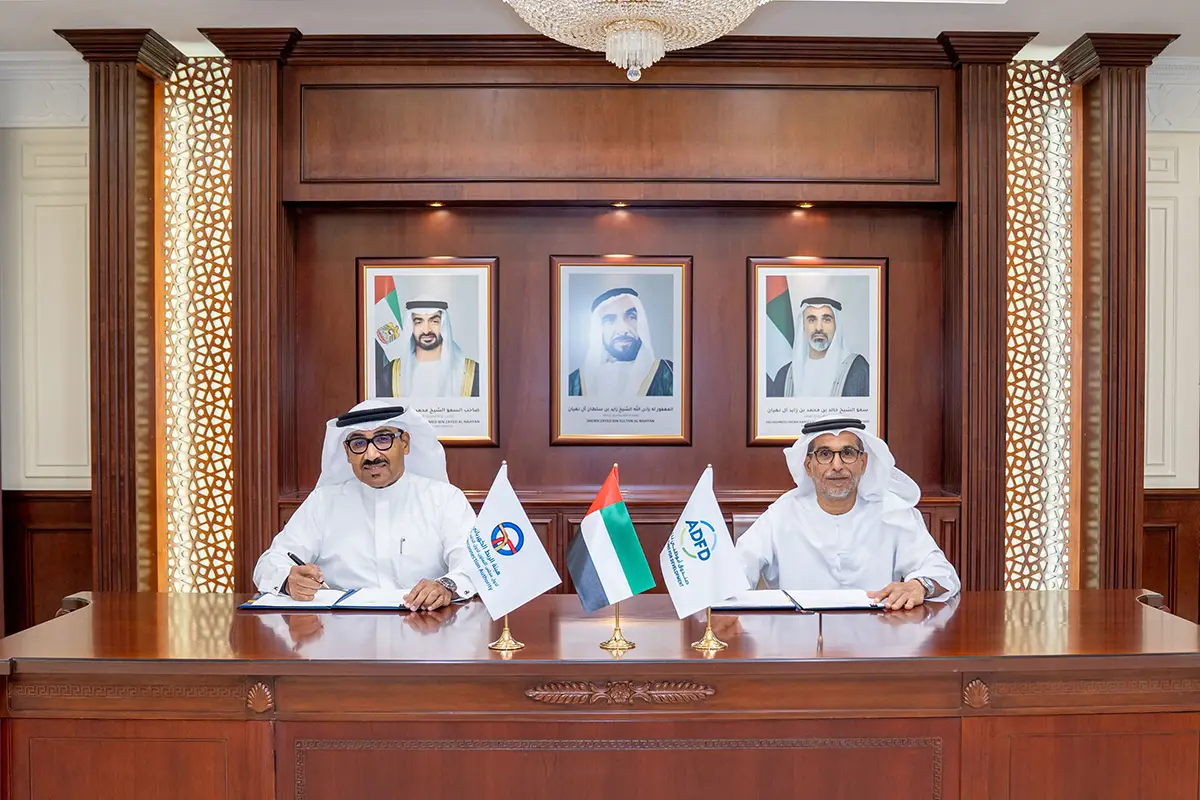
The agreement, signed at ADFD headquarters in Abu Dhabi by Mohammed Saif Al Suwaidi, director-general of ADFD, and engineer Ahmed Ali Al Ebrahim, CEO of GCCIA, is designed to enhance regional energy security and improve power exchange capabilities among GCC member states. This initiative will also contribute to broader economic and infrastructure integration across the region.
Attending the signing ceremony were several senior officials, including engineer Sharif Salim Al Olama, Undersecretary of the UAE Ministry of Energy and Infrastructure, and Dr. Saif Saeed Al Qubaisi, acting director-general of Regulatory Affairs at the Abu Dhabi Department of Energy. Both officials are also members of the GCCIA board.
The expansion project plays a vital role in aligning with the UAE Energy Strategy 2050, which emphasizes efficiency, sustainability, and economic growth. By reinforcing the GCCIA power grid and significantly increasing electricity transmission capacity, the project aims to enhance grid reliability and support shared energy objectives across the region.
Key components of the project include the construction of a 400kV double-circuit overhead transmission line that will span 96 kilometers, linking the Al Silaa substation in the UAE with the Salwa substation in Saudi Arabia. Additionally, the plan involves the enhancement of three major substations in Gonan, Al Silaa, and Salwa, which will be upgraded with new 400kV switchgears, circuit breakers, and reactors.
The development will also feature advanced protection and control systems designed to optimize the performance, stability, and reliability of the grid. According to extensive technical and economic feasibility studies, this project aligns with the GCCIA’s mission to create a robust and future-ready power infrastructure that meets the increasing electricity demand in the region.
Al Suwaidi stated that the project demonstrates ADFD’s commitment to financing impactful infrastructure that aligns with the UAE’s development priorities. He noted that power grid interconnection is crucial for energy security and serves as a foundation for transitioning to clean and sustainable energy sources. He further mentioned, “Our collaboration with the GCC Interconnection Authority is a practical example of regional energy integration.”
Al Ebrahim highlighted that this project marks the first phase of their partnership with ADFD amid the current expansion of the GCC power grid. He pointed out that they are also pursuing key interconnection initiatives with Kuwait, a direct link with Oman, and a southern Iraq grid connection, representing a total investment exceeding $1 billion.
He emphasized that leveraging increased transmission capacity will facilitate a unified Gulf electricity market, enabling cross-border power trade and creating significant economic opportunities, which are projected to exceed $20 billion over the next 15 years.

Al Ebrahim concluded by asserting that the interconnection upgrade is vital for addressing the region’s growing power demands and enhancing flexibility in electricity trading among member states. This partnership between ADFD and GCCIA underscores the strategic importance of regional collaboration in infrastructure development, particularly within the energy sector, which is essential for the Gulf region’s long-term economic and environmental sustainability goals.
Leave a Reply