
Al Ain Farms Group (AAFG), a leading food producer in the UAE, is taking steps to innovate in agriculture through a partnership with the Finnish technology company FoodIQ. This collaboration aims to significantly reduce energy and water consumption while enhancing the nutritional quality of food produced.
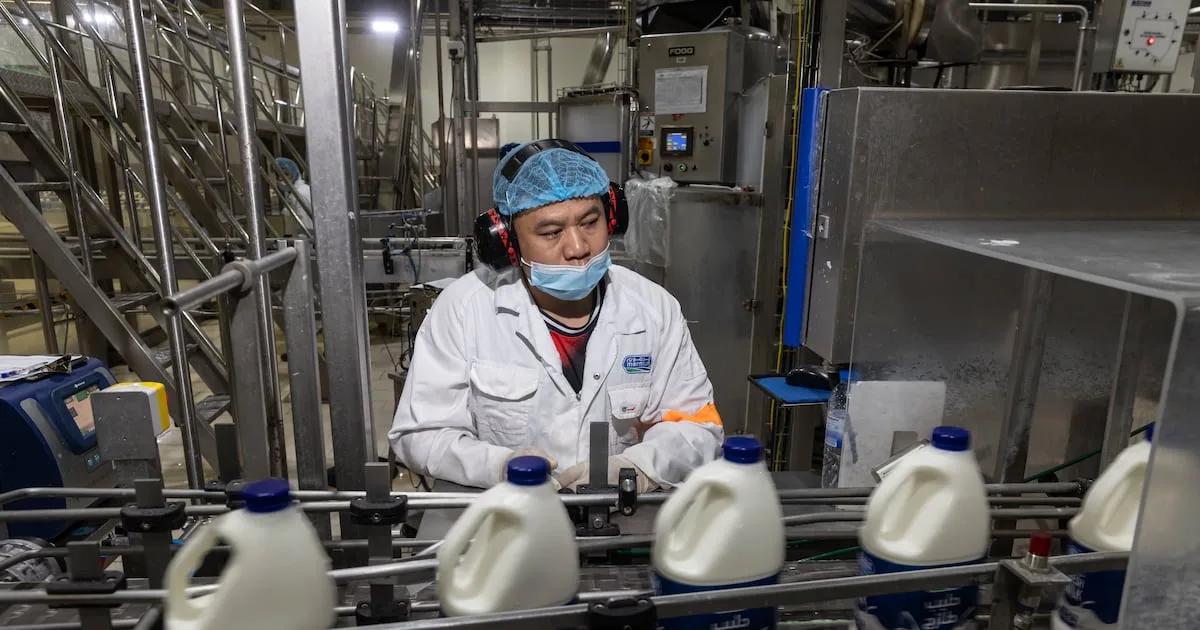
Founded in 1981, Al Ain Farms offers a variety of products, including dairy, poultry, juices, and eggs. The partnership focuses on implementing FoodIQ’s patented multilayer cooker (MLC), a food processing system that minimizes energy and water use while allowing for the production of additive-free dairy and plant-based products. This will be the first time the MLC is utilized outside of Finland.
The urgency for such innovations is underscored by a recent paper published in the Nature science journal, which suggested that global agriculture yields may sharply decline by mid-century due to rising temperatures and water scarcity. Hassan Safi, group chief executive of Al Ain Farms Group, emphasized that the UAE’s capacity to produce food locally with minimal resources is essential for both national food security and climate goals, including achieving Net Zero by 2050.
Developed over a decade by FoodIQ, the MLC enables flexible production of items such as yogurt, smoothies, milk, and cheese without the extensive infrastructure typically required by industrial plants. Mr. Safi noted that the new system would allow Al Ain Farms to produce high-quality products without additives or preservatives, expecting a 20 to 30 percent increase in operational speed compared to conventional methods.
Aseel Takshe, acting dean of the School of Health Sciences and Psychology at Canadian University Dubai, remarked that this partnership supports the UAE’s strategic priorities in food security and climate action. She highlighted the UAE’s National System for Sustainable Agriculture, which aims to boost local food production, reduce reliance on imports, and enhance resilience to climate change through modern agricultural technologies.
The MLC stands out from traditional dairy plants that require extensive infrastructure and kilometers of pipelines. Instead, the MLC consolidates multiple production stages into a single modular unit that can fit in a large office space. Robert Savikko, chief executive of FoodIQ, explained that washing 20 kilometers of piping in a conventional dairy plant consumes vast amounts of water, whereas their system only requires about 10 meters, making it simpler, faster, and more resource-efficient.
Moreover, the gentler processing method preserves more nutritional value, allowing products to have longer shelf lives without the need for chemical preservatives. Savikko noted that while conventional production often uses artificial flavors, their system can incorporate real ingredients, such as bananas or dates, reflecting the concept of clean labeling.
Both FoodIQ and Al Ain Farms anticipate launching the first wave of new products by the end of 2025, with the MLC being installed in a facility in Al Ain as part of the company’s operational ecosystem.
This shift towards low-footprint, modular production is crucial for the UAE’s resilience strategy, especially highlighted by the vulnerabilities exposed during the COVID-19 pandemic. Mr. Safi indicated that technologies like the MLC would help AAFG future-proof its operations by utilizing local ingredients, decreasing import dependence, and reducing environmental impact.
While precise figures on resource savings were not disclosed, Mr. Safi mentioned that the company is actively working towards eight of the UN’s 17 Sustainable Development Goals, focusing on initiatives like water recycling and transitioning to recyclable materials for packaging.
FoodIQ, which operates an MLC-based plant in Finland, sees the UAE as a key market for global expansion and is negotiating similar partnerships in the US, Asia, and Europe. The MLC is also being designed to incorporate AI and machine learning to adapt recipes to local conditions, such as variations in water quality or air temperature.

With the installation process underway and the launch of the first products expected soon, both partners view this initiative as a significant milestone in redefining sustainable food manufacturing in a resource-scarce world. As the UAE works to future-proof its food systems, the success of this partnership may demonstrate that the future of food production lies not in scale, but in smart solutions.
Leave a Reply