
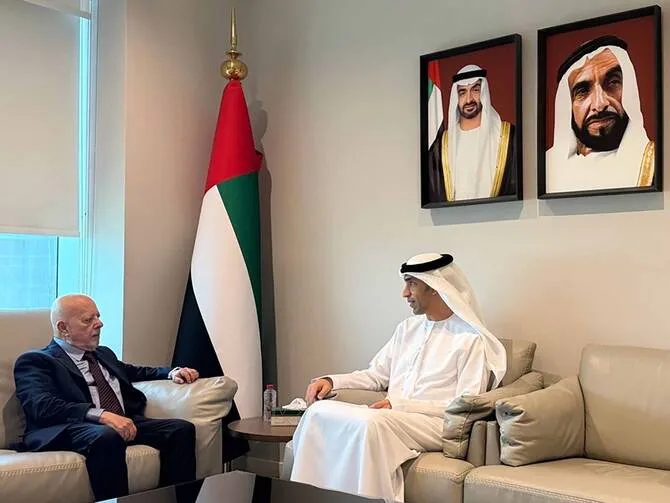
The United Arab Emirates (UAE) and Syria have taken a significant step towards revitalizing their economic relationship by re-establishing their joint business council. This strategic initiative aims to enhance private-sector investments and bolster Syria’s economic recovery in the aftermath of the prolonged conflict. The announcement came during discussions in Abu Dhabi between the UAE Minister of Foreign Trade, Thani Al-Zeyoudi, and the Syrian Minister of Economy and Industry, Mohammed Nidal Al-Shaar, who focused on expanding trade and investment opportunities between the two nations.
This reconvening of the joint business council not only reflects a renewed commitment to strengthening bilateral ties but also underscores the importance of collaborative efforts in navigating the complex landscape of postwar recovery. The council is expected to serve as a platform for fostering dialogue and cooperation in various sectors, facilitating investment opportunities, and encouraging Emirati enterprises to engage in Syria’s reconstruction efforts.
The UAE has positioned itself as a pivotal economic player in the Gulf region, with a well-developed infrastructure and a diverse economy. By reestablishing the business council with Syria, the UAE might find new avenues for its businesses to explore in sectors such as construction, energy, and agriculture, all critical for Syria’s rebuilding process. Moreover, the UAE’s experience in managing complex investment landscapes can provide valuable insights to Syrian businesses looking to modernize and rebuild.
In recent years, regional dynamics have shifted, prompting the UAE and other Gulf nations to reconsider their foreign policies towards Syria. The war has devastated the Syrian economy, creating an urgent need for substantial investment and partnerships. The UAE’s proactive stance in rekindling economic ties indicates a broader strategy to enhance stability in the region, not just through diplomatic channels but also by fostering economic interdependence.
Comparatively, neighboring countries like Saudi Arabia and Qatar have also expressed interest in tapping into the Syrian market, albeit cautiously, given the complexities of the political situation. The UAE’s bold move could give it a competitive advantage in establishing a foothold in Syria’s economic landscape as it emerges from the ashes of conflict. As the UAE continues to cultivate a business-friendly environment, it may attract investment not only from local players but also from international investors looking for opportunities in a recovering market.
Looking forward, the reinstatement of the UAE-Syria business council could signify a shift towards a new era of economic collaboration that benefits both nations. If successful, this alignment could help pave the way for further investment initiatives and partnerships in the region, ultimately leading to a more stable economic environment. As the situation unfolds, the effects on investors and businesses will be crucial to monitor, especially as the Gulf region navigates the intricate balance between economic interests and geopolitical realities.
Leave a Reply