
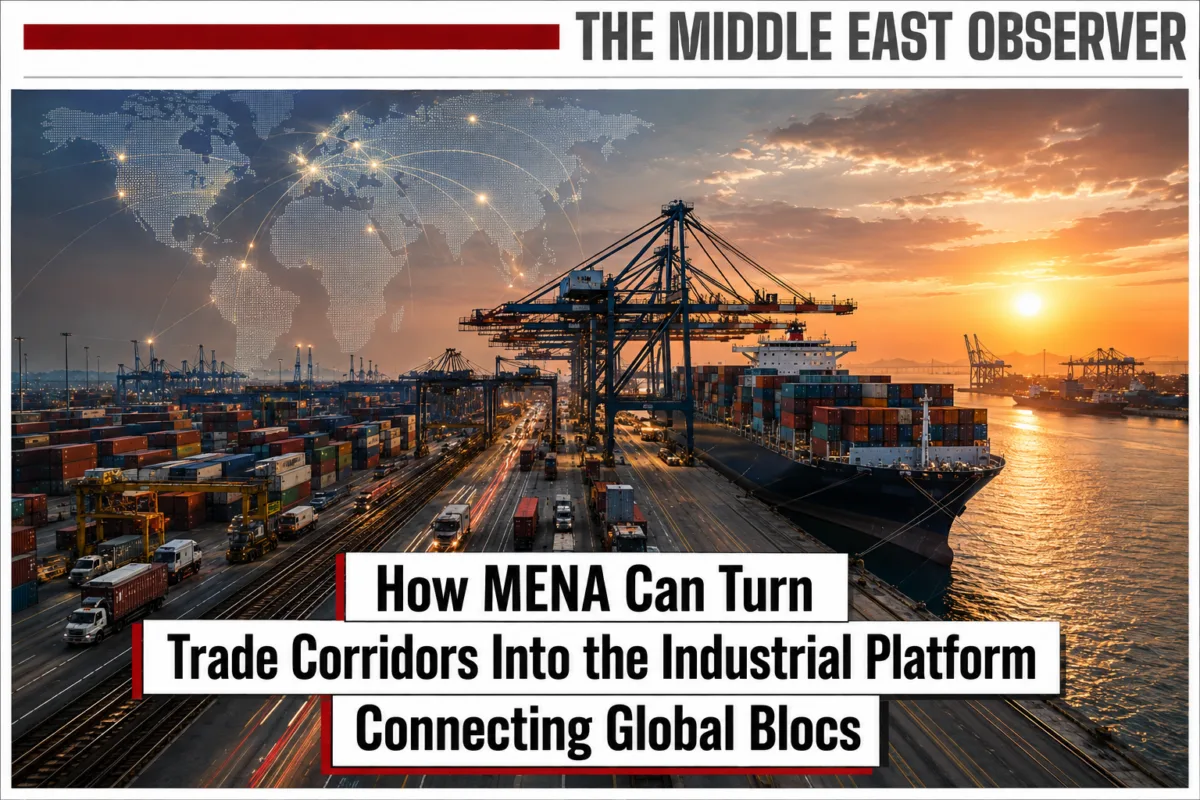
The Middle East and North Africa (MENA) region stands at a critical juncture as geopolitical dynamics and shifting global supply chains reshape trade routes and economic strategies. With an increasing focus on localizing production and minimizing dependency on distant markets, MENA has a unique opportunity to convert its historical trade corridors into vibrant industrial platforms that connect major global blocs.
China’s enforcement of stringent controls over essential minerals and resources has significantly impacted global supply chains. Meanwhile, the U.S. is actively seeking to fortify its supply chain resilience, particularly for critical technologies and materials. These developments, compounded by Africa’s growing insistence on regional processing and Europe’s tightening of carbon and trade regulations, have unveiled vulnerabilities within the traditional industrial framework that has long supported globalization.
The recent Iran conflict, along with other regional tensions, has further underscored the vulnerability of existing trade routes that have historically underpinned MENA’s strategic importance. These factors suggest that the region must adapt to evolving economic realities, pivoting from a reliance on external markets to harnessing its own geographic and resource advantages to establish a self-sustaining industrial ecosystem.
Investors and businesses within the UAE and broader Gulf region stand to benefit significantly from leveraging these trade corridors. Transforming these routes into platforms for industrial activity could enhance the region’s appeal as a global manufacturing hub, facilitating not only exports but also value-added processing. By positioning themselves as key players in the logistics and industrial supply chain, Gulf nations could attract foreign direct investment and stimulate local economies.
Comparing MENA’s potential with that of established players like Southeast Asia reveals substantial opportunities. Southeast Asia has successfully positioned itself as a global manufacturing center through strategic infrastructural investments and regional cooperation. MENA could follow suit by enhancing its logistical frameworks, improving transport connectivity, and fostering collaboration between nations within the region. These steps would not only fortify inter-regional trade but also enable MENA to become an attractive destination for multinational corporations seeking to diversify their supply chains.
As the global landscape continues to transform, MENA’s capability to navigate these changes will be crucial for its economic future. The transformation of trade corridors into industrial platforms is not just a challenge but a strategic opportunity that could redefine the region’s role in the global economy. MENA’s ability to adapt and innovate in response to these external pressures will determine its success in harnessing its resources and geographical advantages for sustainable growth.
Leave a Reply