
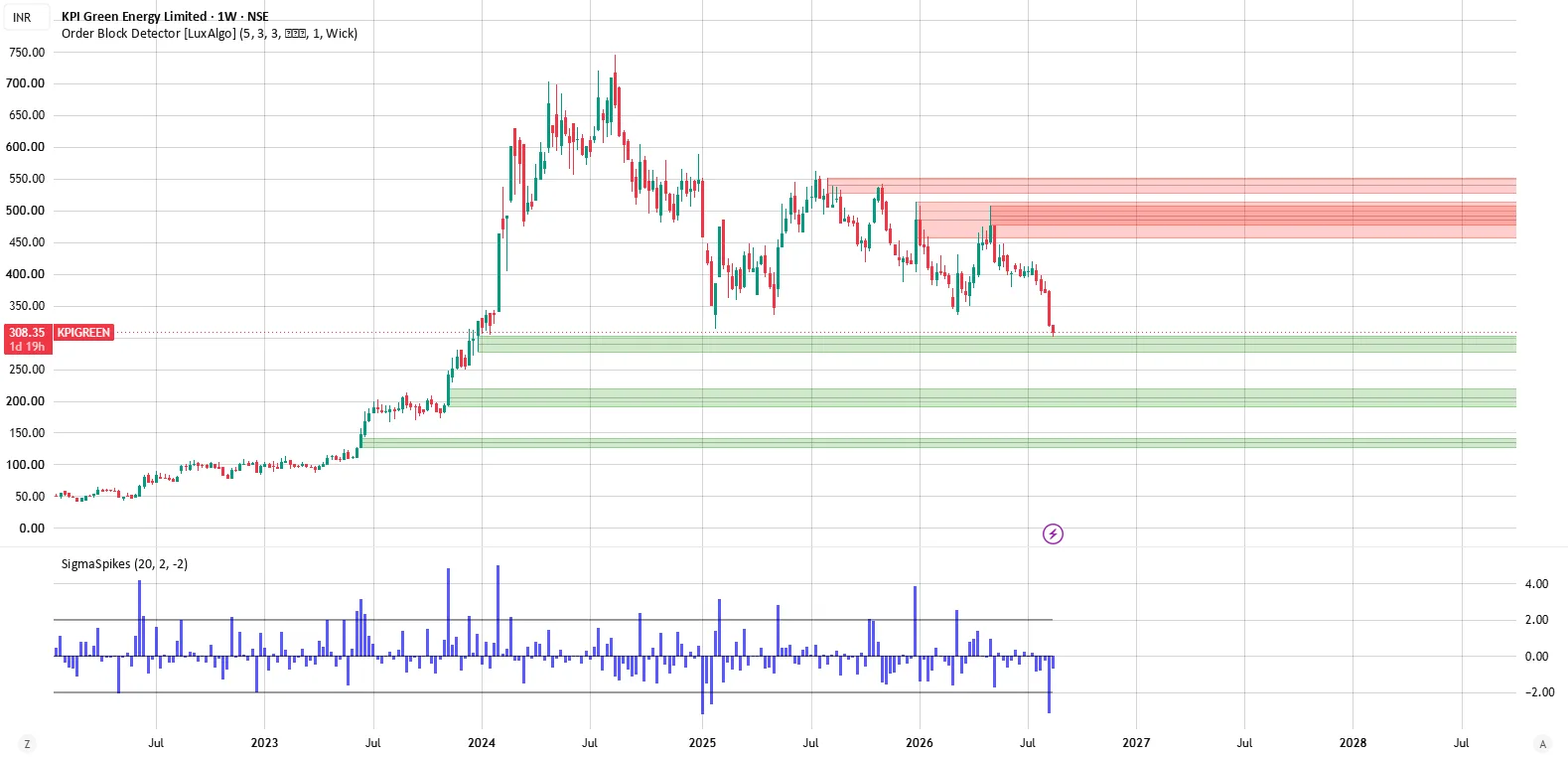
In a significant transformation, KPI Green Energy is evolving from a traditional solar engineering, procurement, and construction (EPC) focus into a comprehensive integrated renewable-energy platform. The company is expanding its footprint to include independent power producer (IPP) operations, wind energy, and battery energy storage systems (BESS). As of June 2026, KPI Green has amassed a portfolio totaling approximately 6.94 GW, of which 1.87 GW has been installed and 5.07 GW is under construction.
This strategic shift towards IPP is poised to enhance the company’s profitability, with management projecting EBITDA margins between 85% to 90% from these projects. This change is crucial as the global energy landscape is increasingly gravitating towards renewable sources, and KPI Green’s pivot aligns with this trend. Additionally, the company is exploring new avenues, including floating solar energy, wind power, and energy trading, further solidifying its market position.
KPI Green’s financial performance in the first quarter of FY27 indicates robust growth, with revenues reaching approximately ₹710 crore, marking a 16% year-on-year increase. Moreover, EBITDA has risen to ₹262 crore, reflecting a 21% growth, with margins improving to around 37%. However, the company faced challenges as profit after tax (PAT) declined to ₹95 crore from ₹111 crore year-on-year, primarily driven by increased depreciation and finance costs associated with its expanding asset base.
Despite these challenges, KPI Green’s cash profit of ₹176 crore indicates a healthy underlying operating engine. The current market valuation of the company’s stock is around ₹308, trading at about 13.4 times its earnings, significantly lower than the industry average price-to-earnings ratio of 22.8. Furthermore, the company’s price-to-earnings growth (PEG) ratio is approximately 0.21, and the return on equity (ROE) stands at around 17.4%, highlighting a potentially attractive investment opportunity.
Management has expressed optimism regarding sustainable revenue growth, expecting rates between 30% to 40%, although this forecast is conservative compared to earlier projections of 40% to 50%. Notably, IPP generation has surged nearly fourfold compared to the previous year, already accounting for over 65% of the total generation for FY26. The expectation is that IPP will contribute about 20% of overall revenue, establishing a stable and recurring earnings stream.
Looking ahead, the next three years present a valuable runway for KPI Green, given its 5.07 GW capacity under development. Investments in BESS, wind, floating solar, and international projects, particularly in Botswana and the UAE, are expected to diversify revenue sources beyond solely solar EPC. However, investors must remain vigilant regarding the challenges posed by high debt levels, which stand at nearly ₹5,197 crore, and a promoter pledge percentage of 44.7%, presenting notable risks in the financial landscape.
In summary, KPI Green’s transition from a solar EPC company to a significant player in the IPP sector could reshape its business model, offering a more stable revenue stream through long-term power purchase agreements (PPAs). If the company successfully executes its plans and expands its IPP capabilities as projected, it could emerge as a leading renewable energy platform in the region.
Leave a Reply