
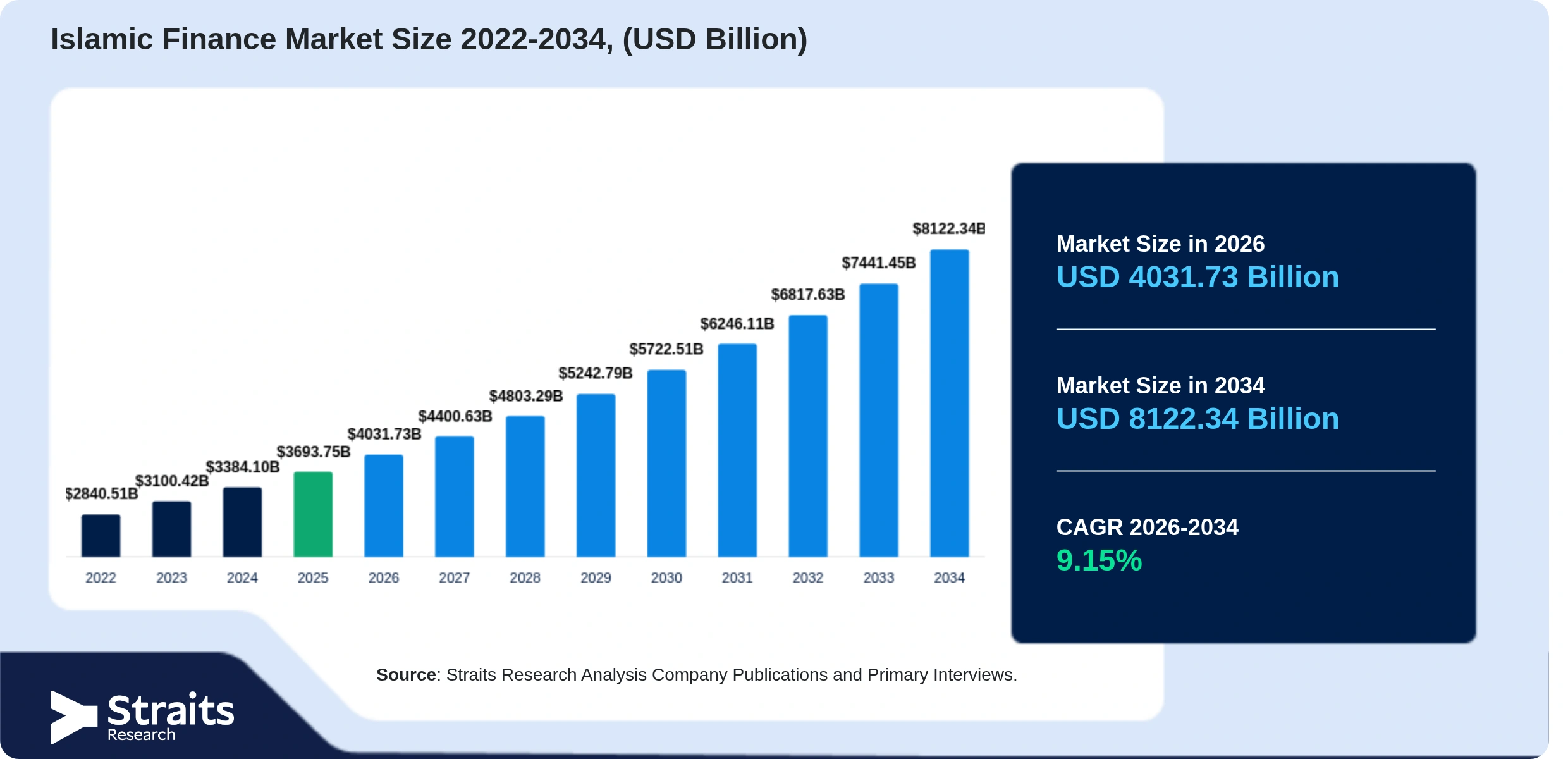
The Islamic finance sector is experiencing remarkable growth, with projections indicating an increase from $4,031.73 billion in 2026 to $8,122.34 billion by 2034. This expansion represents a compound annual growth rate (CAGR) of 9.15% over the forecast period, signaling a robust interest and investment potential in this financial segment.
This growth can be attributed to several factors, including the rising demand for Sharia-compliant financial products and services. As global awareness of ethical finance increases, more investors and institutions are looking to align their portfolios with Islamic principles, which emphasize risk-sharing and social justice. Consequently, the Islamic finance market is rapidly evolving to meet these demands.
The United Arab Emirates and the broader Gulf region seem poised to benefit significantly from this upward trend. The UAE, in particular, has been a frontrunner in fostering an Islamic finance ecosystem, supported by favorable regulatory frameworks and a growing number of Islamic financial institutions. The commitment of local governments to diversify their economies further enhances the attractiveness of the Islamic finance sector as a viable investment avenue.
In comparison with conventional finance, the Islamic finance market is demonstrating resilience even amid global economic challenges. Traditional banking systems often grapple with issues such as debt levels and market volatility, while Islamic finance’s risk-sharing model can provide more stability. This distinction may attract cautious investors seeking refuge in ethical finance options, thereby boosting participation in the Islamic finance market.
The implications for investors and businesses are substantial. With a significant investment outlook, businesses in the Gulf region should consider integrating Sharia-compliant offerings into their portfolios, allowing them to tap into a new demographic of ethically-minded clients. Additionally, the growth of this sector presents lucrative opportunities for financial technology innovations aimed at enhancing the efficiency of halal investments.
Looking ahead, the Islamic finance market appears to be on a promising trajectory. Stakeholders, including policymakers, investors, and financial institutions, must collaboratively nurture this environment to sustain growth. As the market evolves, ongoing research and development efforts will be crucial in optimizing products and services to meet the changing consumer needs, ensuring that the Islamic finance sector remains robust and competitive well into the future.
Leave a Reply