
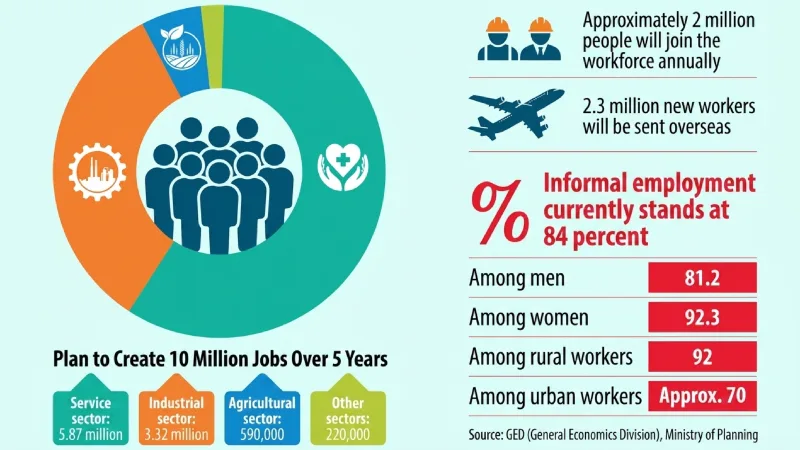
The UAE government’s bold target of creating 10 million jobs over the next five years is encountering significant challenges stemming from the realities of the labor market. While this initiative aims to address rising unemployment and diversify the economy, factors such as automation, skill mismatches, informal employment, and lack of investment are complicating its execution.
Automation is increasingly shaping the future of work, particularly in the manufacturing sector, where machines and technology are starting to replace traditional labor roles. This shift not only reduces the demand for workers in this field but also calls into question the types of skills that will be most valuable in the economy of the future. If the government does not adapt its employment strategies to account for these trends, the goal of generating millions of new jobs may be unattainable.
Additionally, a mismatch between the skills possessed by the current workforce and those demanded by employers is becoming a critical issue. Many young people entering the job market are finding that their qualifications do not align with the roles available, particularly in high-tech and specialized fields. This discrepancy could lead to heightened unemployment rates, which would run counter to the UAE’s employment goals.
The informal labor sector also poses a challenge to the UAE’s job creation targets. A substantial part of the workforce operates outside the formal economy, often foregoing standard rights and protections. As a result, the actual numbers of people employed may not reflect the government’s official statistics, complicating efforts to assess the employment landscape accurately.
Investment plays a crucial role in the job market, and the current climate shows a decline in both foreign direct investment and local entrepreneurship initiatives. Without adequate investment, businesses are less likely to expand and hire new employees. The lack of robust financial support for startups and small to medium enterprises (SMEs) can stifle the creation of jobs, and if this trend continues, achieving the 10 million job goal becomes increasingly difficult.
The importance of aligning government initiatives with labor market realities cannot be overstated. To succeed, policymakers must engage with various stakeholders, including businesses and educational institutions, to ensure that the skills gap is addressed and that the workforce is equipped to meet the demands of a changing economy. Fostering an environment that encourages investment and innovation will also be essential for sustaining long-term job growth.
In conclusion, while the UAE’s objective of creating 10 million jobs is noble, a multifaceted approach that tackles the intertwined issues of automation, skills mismatch, informal work, and investment is essential. The coming years will reveal whether the government can devise effective strategies to overcome these hurdles and secure the economic future of the region.
Leave a Reply