
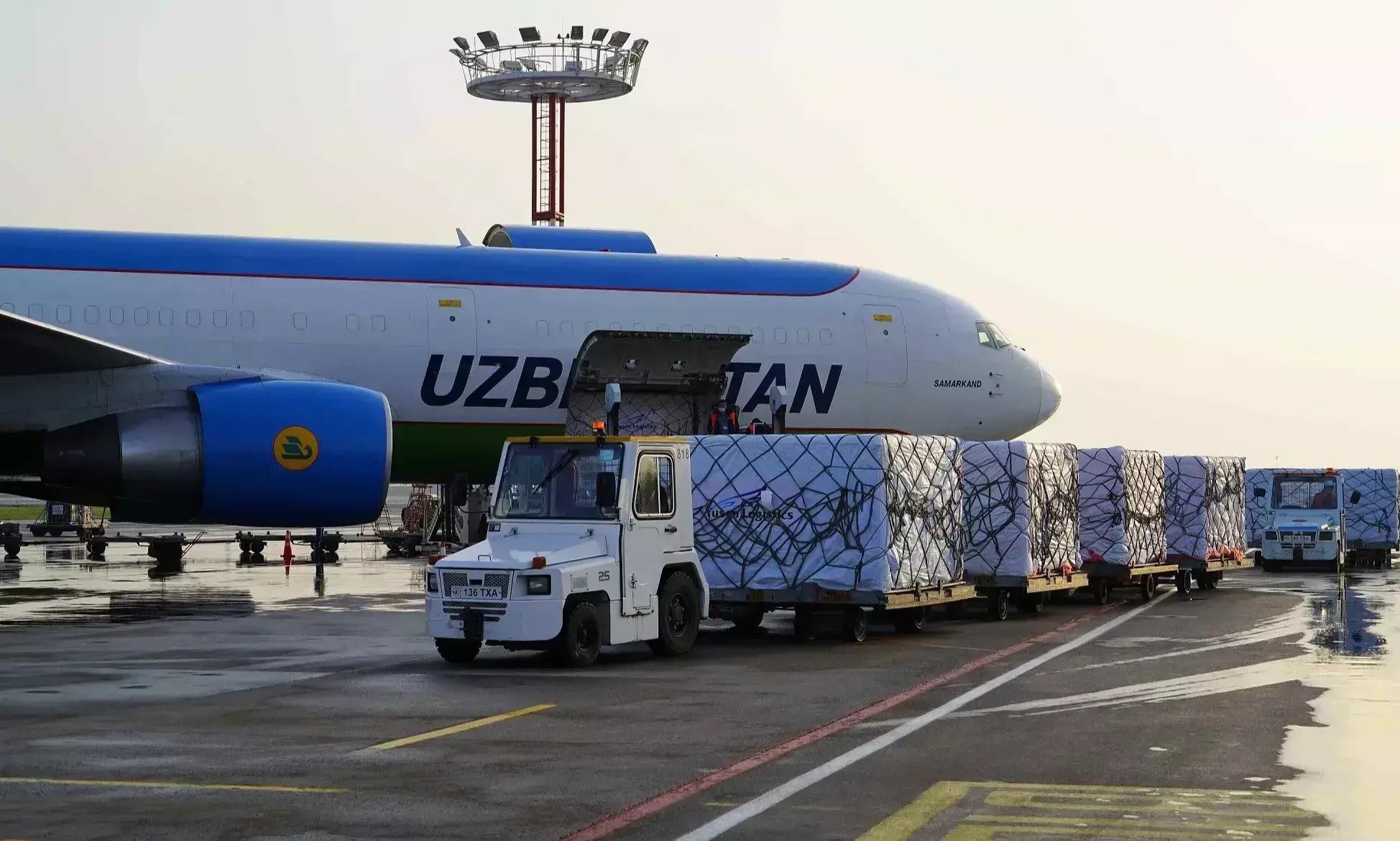
The recent airspace restrictions in the Gulf have driven businesses to seek alternative trade routes between Asia and Europe. As logistics firms grapple with increased costs and delays, Central Asia is positioning itself as a potential substitute for Middle Eastern pathways, offering a land bridge leading into a short final air travel segment.
This strategic shift results from a combination of geopolitical tensions and stringent air traffic controls that have affected the typical supply chains. With trade dynamics rapidly evolving, nations along the Caspian coast, as well as those in Central Asia, are actively marketing their infrastructure capabilities to international logistics companies. Airports in Azerbaijan, Kazakhstan, and Uzbekistan are eager to attract freight traffic that would otherwise flow through the Gulf.
The implications for the Gulf region are significant. Historically, the Middle East has been a pivotal hub for logistics and transportation due to its geographic proximity to Europe and Asia. However, as limitations on airspace complicate existing routes, stakeholders within the Gulf are tasked with adapting to a new reality. Cities such as Dubai and Abu Dhabi, which have invested heavily in cargo infrastructure, face growing competition from emerging corridors in the north.
Moreover, Central Asia’s appeal is bolstered by its rapidly improving transport network and openness to foreign investment. Initiatives such as the Trans-Caspian International Transport Route highlight the region’s ambition to become a key player in global logistics. As these nations enhance their logistical frameworks, investors in the UAE and beyond should closely monitor developments that signal a shift in trade routes.
On the investor front, shifting trade routes can create opportunities for strategic partnerships and ventures within Central Asia. Businesses in the UAE leveraging their logistics expertise can explore collaborations with Central Asian companies to navigate this emerging corridor effectively. The new routes may also present significant cost efficiencies and reduced transit times, appealing to companies under pressure to optimize their supply chain operations.
Looking ahead, the evolution of trade routes between Asia and Europe may redefine supply chain strategies in the Gulf and Central Asia. The ongoing engagement from regional governments to foster better connectivity suggests that this rivalry will intensify. As Central Asia positions itself on the global logistics map, companies must adapt and innovate to remain competitive, emphasizing the importance of flexible strategies in today’s rapidly changing economic landscape.
Leave a Reply