
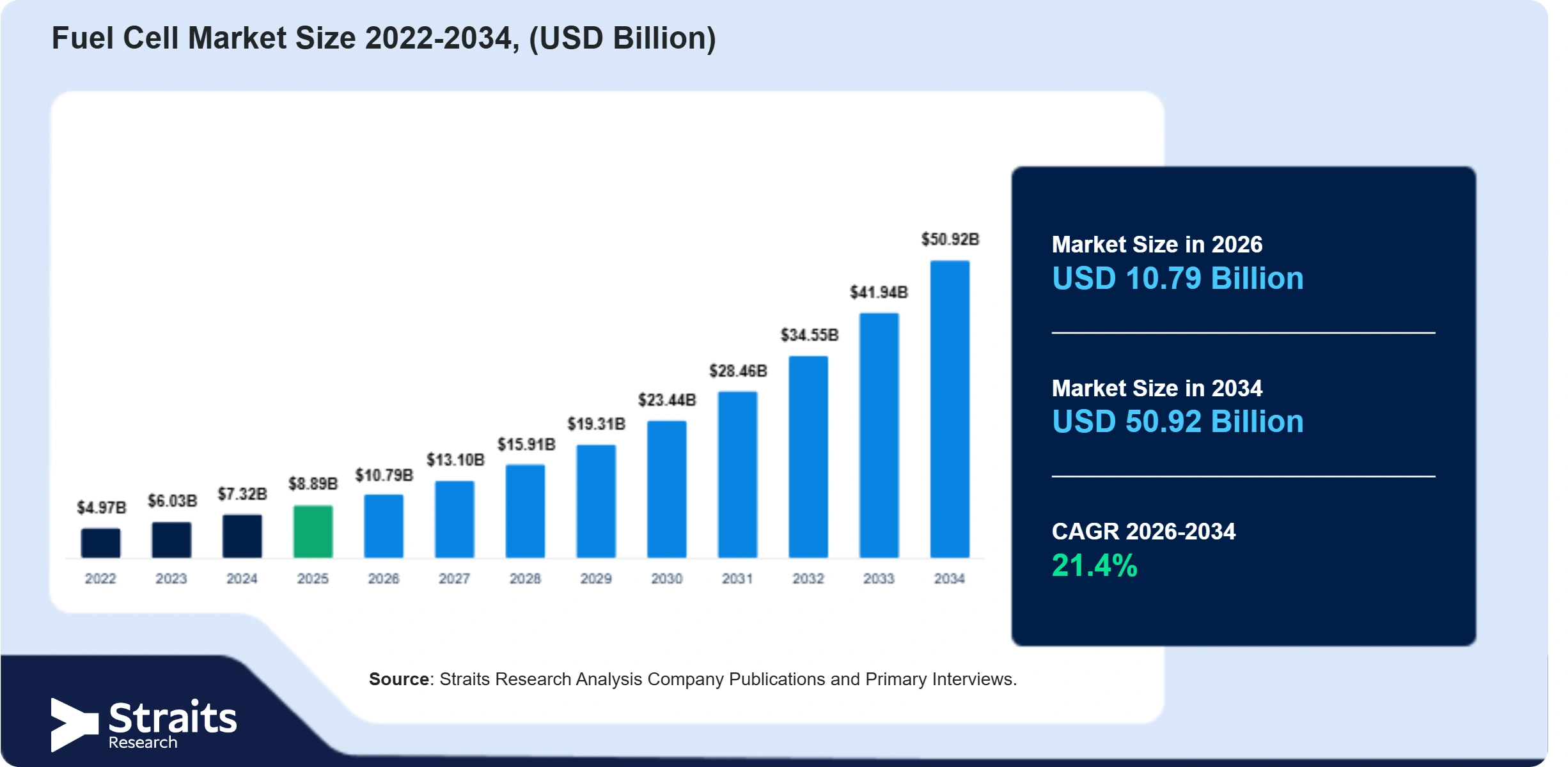
The global fuel cell market is on the cusp of significant growth, with projections indicating an increase from $10.79 billion in 2026 to a staggering $50.92 billion by 2034. This remarkable expansion is expected to occur at a compound annual growth rate (CAGR) of 21.4% during the forecast period, highlighting the considerable momentum in this sector.
As industries and governments increasingly prioritize sustainable energy solutions, fuel cells have emerged as a pivotal component in the transition towards cleaner energy. These electrochemical devices convert chemical energy directly into electricity, providing a zero-emission option for a variety of applications, including transportation, stationary power generation, and backup power systems. The projected growth of the fuel cell market reflects a broader shift towards decarbonization and the pursuit of alternative energy sources that align with global sustainability goals.
The Gulf region, particularly the United Arab Emirates, is poised to leverage this upward trend as it invests heavily in clean energy initiatives. The UAE government has set ambitious targets as part of its Vision 2021 and the Energy Strategy 2050, aiming to increase the share of clean energy in the total energy mix. The fuel cell market fits seamlessly within this framework, as it can support the electrification of the transportation sector and contribute to grid stability, particularly with the increase of renewable energy sources such as solar and wind.
Major players in the fuel cell market are ramping up their investments and research efforts to meet the rising demand. Companies such as Ballard Power Systems, Plug Power, and FuelCell Energy are continuously innovating, focusing on enhancing efficiency and reducing costs. As competition intensifies, these advancements could lead to impressive breakthroughs that further catalyze market growth. Comparatively, the fuel cell sector stands out among alternative energy technologies, such as batteries, due to its faster refueling times and longer operational lifespans, making it a compelling choice for various industries.
For investors, this growth trajectory presents a significant opportunity. The increasing number of government incentives and private sector investments aimed at promoting green technologies adds further optimism to the fuel cell market. As companies pivot towards cleaner energy solutions, aligning with investors who prioritize Environmental, Social, and Governance (ESG) criteria can offer avenues for impactful returns and sustained growth.
In conclusion, the prospective boom in the fuel cell market signals not only a shift towards sustainable energy but also highlights the immense investment potential within this space in the Gulf region. As the UAE and its neighbors prioritize green energy solutions, fuel cells will undoubtedly play a crucial role in shaping the future energy landscape, paving the way for innovative businesses and investment opportunities. Stakeholders should closely monitor this burgeoning market as it offers significant promise amid the global transition to a cleaner and more sustainable energy system.
Leave a Reply