
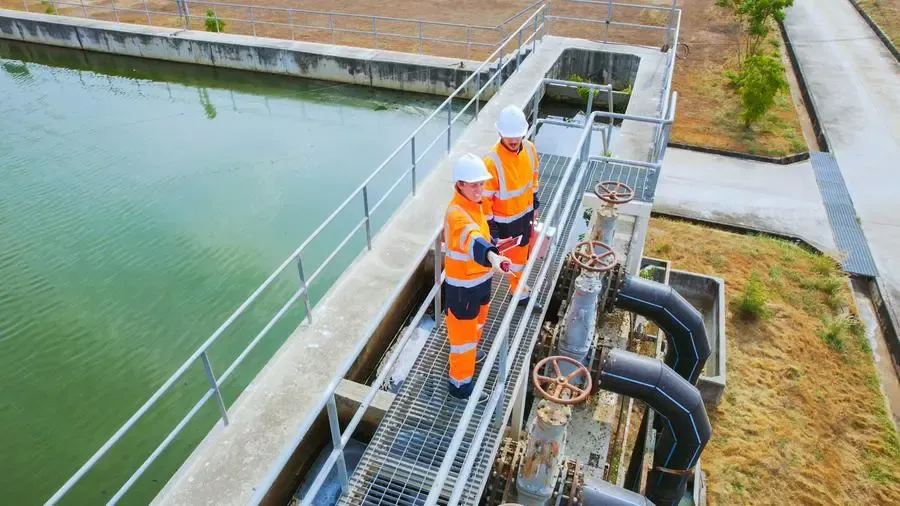
Ras Al Khaimah has successfully secured a significant financing package amounting to $326 million for an ambitious wastewater management project. This funding is a joint effort by a consortium led by Etihad Water and includes notable partners such as TAQA Water Solutions and Saur Group. The project aims to enhance the region’s water treatment capabilities and is slated to commence commercial operations in early 2029.
The initiative reflects a growing trend within the UAE, particularly in Ras Al Khaimah, to invest heavily in sustainable and efficient water management solutions. As water scarcity continues to be a pressing issue across the Gulf region, this project stands out as a vital component in addressing the increasing demand for clean water. By focusing on wastewater treatment, the region not only aims to improve its environmental footprint but also enhances the resilience of its water supply systems.
In comparison to other emirates, Ras Al Khaimah is making strides to position itself as a leader in innovative water resource management. While larger cities like Dubai and Abu Dhabi have numerous established systems in place, Ras Al Khaimah’s focused investment in wastewater processing could serve as a model for other regions struggling with similar challenges. This project has the potential to set new benchmarks in operational efficiency and ecological sustainability in the water management sector.
The involvement of TAQA Water Solutions and Saur Group underscores a strategic partnership that leverages expertise from global leaders in water solutions and resource management. These companies are recognized for their cutting-edge technologies and best practices, which means that the Ras Al Khaimah wastewater project is poised to incorporate advanced methodologies that could lead to more effective and efficient operations. The collaboration also provides a robust platform for knowledge transfer, enhancing local capabilities in water management.
For investors and businesses, this project presents numerous opportunities. The increased funding and focus on infrastructure development can lead to enhanced local economic activity and create new job opportunities within the Emirate. Moreover, companies engaging in related industries—such as construction, technology, and environmental services—are likely to benefit directly from this project. It signifies an attractive environment for potential investors looking to collaborate on similar ventures in the region.
Looking forward, the success of this initiative will likely pave the way for further investment in water management projects across the Gulf. As awareness of the importance of sustainable practices continues to grow, the demand for similar projects will increase. The Ras Al Khaimah wastewater project could inspire other areas to follow suit, making this a critical moment in the UAE’s effort to develop a sustainable future. This positioning could also attract more international partners keen on investing in innovative resource management undertakings, thereby fostering a collaborative environment for future infrastructure projects.
Leave a Reply