
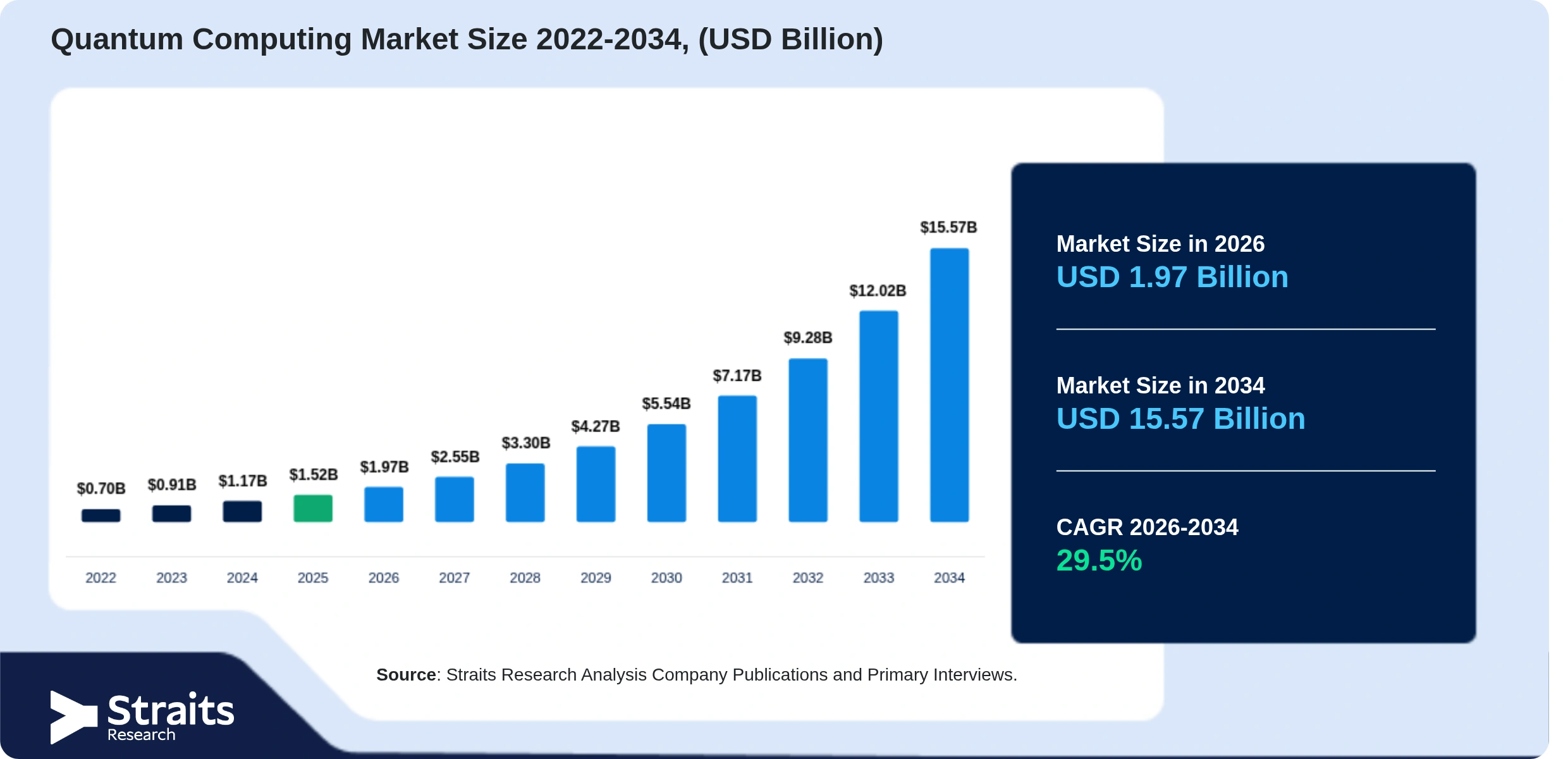
The global quantum computing market is set for significant expansion, with projections estimating growth from $1.97 billion in 2026 to $15.57 billion by 2034. This remarkable growth represents a compound annual growth rate (CAGR) of 29.5% during the forecast period. The accelerating interest in quantum technologies underscores a pivotal shift in several industries, particularly in research, finance, and cybersecurity.
This surge can be attributed to various factors, including increased investment in quantum research and development, technological advancements, and a growing demand for efficient computational capacities. These elements are converging to enhance the capabilities of quantum computing systems, enabling them to solve complex problems beyond the reach of traditional computers.
In the context of the Gulf Cooperation Council (GCC) region, the implications of this expansion are profound. Countries such as the United Arab Emirates are actively investing in science and technology initiatives, with governments seeking to establish themselves as leaders in this cutting-edge field. The UAE’s government has launched several initiatives and partnerships designed to harness the power of quantum computing, positioning itself as a hub for innovation.
The competitive landscape of the quantum computing market is increasingly becoming crowded, with key players such as IBM, Google, and D-Wave leading the charge. However, regional players in the Gulf are also making significant strides, aided by favorable government policies and ample funding opportunities. This regional dynamism is expected to attract global attention, fostering a collaborative ecosystem that promotes knowledge sharing and innovation.
For investors and businesses, the growth of the quantum computing market presents both exciting opportunities and challenges. As quantum technologies continue to mature, companies that fail to adapt may find themselves at a competitive disadvantage. On the other hand, early adopters of quantum computing solutions could gain significant market advantages, particularly in sectors where rapid computation and data analysis are critical.
Looking ahead, the future of quantum computing appears bright, with advancements likely to accelerate and new applications emerging across various sectors. As businesses seek to leverage advanced technologies for competitive advantage, the importance of quantum computing as a strategic asset will only intensify. Stakeholders within the Gulf region are thus encouraged to invest in quantum initiatives, as the potential rewards could outweigh the risks associated with this still-nascent technology.
Leave a Reply