
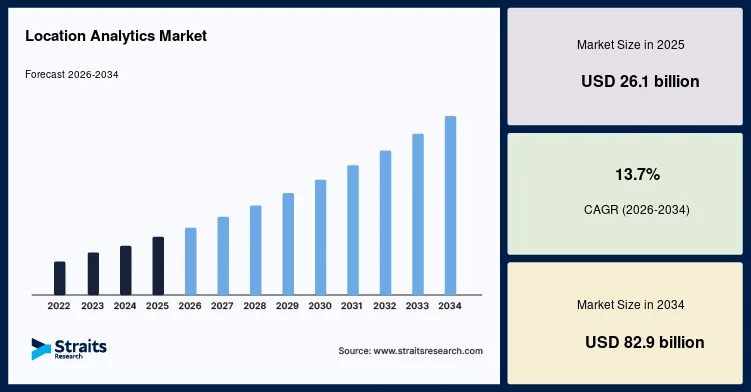
The location analytics sector is poised for remarkable growth, with estimates indicating an increase from $29.7 billion in 2026 to a noteworthy $82.9 billion by 2034. This growth represents a robust compound annual growth rate (CAGR) of 13.7% during the forecast period from 2026 to 2034. As businesses across various sectors increasingly rely on data-driven insights, the demand for location analytics tools is expected to soar, reflecting a significant shift in how organizations strategize their operations.
Location analytics involves the collection and analysis of geographical data to understand patterns and trends, which can significantly enhance decision-making processes. By leveraging location-based data, companies can improve their marketing strategies, optimize logistics, and better understand customer behavior. This capability becomes crucial in competitive markets such as the Gulf region, where businesses are consistently seeking innovative approaches to gain an edge.
In the context of the UAE and Gulf Cooperation Council (GCC) countries, the anticipated expansion of the location analytics market presents numerous opportunities. With urbanization and economic diversification being key priorities in the region, governments and organizations can utilize location data to enhance public services, optimize resource allocation, and bolster infrastructure development. As a result, businesses that harness location analytics will likely thrive in this evolving landscape.
When comparing the GCC location analytics market to global trends, it is evident that the region is increasingly adopting advanced data analytics technologies. While North America currently leads the global market, the pace of adoption in the Gulf is accelerating. Leading firms in the UAE and surrounding areas are enhancing their capabilities in data interpretation and geographic information systems, thus positioning themselves as valuable players on a global scale.
The implications for investors are profound. As the market matures, there will be a higher demand for tailored solutions and advanced analytics capabilities. Companies that are agile and adaptive in their approach to integrating location-based insights into their operations are likely to attract significant investment. This trend may lead to an influx of startups focused on developing niche location analytics tools, further enriching the ecosystem.
In conclusion, the location analytics market’s projected growth signals a transformative shift in how businesses operate, especially in the dynamic environment of the UAE and the broader Gulf region. As companies leverage sophisticated location-based analytics, they will undoubtedly uncover new avenues for growth and innovation. Stakeholders should remain vigilant and responsive to these developments, ensuring they are well-positioned to harness the vast potential of location analytics over the coming decade.
Leave a Reply